Team building has become a familiar concept. Most decision-makers have organized something that carried the label. A workshop outside the office. A shared dinner. An activity meant to break routine and create connection. Despite these efforts, many teams return unchanged.
Not because Italy was the wrong choice. Not because the venue was lacking. But because the activity itself was treated as entertainment rather than as a strategic instrument.
This distinction matters more than ever.
Teams today are not struggling with motivation alone. They struggle with fragmentation, blurred priorities, unspoken tensions, and a lack of shared reference points. A well-designed team experience can address these issues. A pleasant one rarely does.
Italy offers extraordinary settings. But the impact does not come from where you are. It comes from what you do together, and how deliberately it is designed.
Why team building in Italy is being reconsidered now
In the past, team building was often symbolic. A reward for a difficult year. A gesture of appreciation. A pause. Today, leadership expectations are different. Hybrid work has weakened informal bonds. Teams collaborate efficiently, but often without depth. Trust exists, but it is fragile. Alignment is assumed, not verified.
This is why many companies are revisiting the idea of team building in Italy. Not to escape work, but to recalibrate how people work together. Italy is uniquely positioned for this shift. Not because of its beauty alone, but because its culture naturally slows interaction down. Meals take time. Conversations unfold. Hierarchies soften at the table. Shared effort is normalized.
Used well, these conditions amplify the effect of a meaningful activity. Used poorly, they remain surface-level experiences.
The difference lies in intention.
The problem with activity-first thinking
Many team events begin with a familiar question: What should we do? Cooking class, wine tasting, sailing, hiking, city tour.
These activities are not inherently wrong. But when chosen as standalone attractions, they rarely lead to lasting change. They fill time. They create photos. They generate polite satisfaction.
What they do not do is shift dynamics.
An activity becomes a strategic tool only when it is selected and structured to produce a specific human outcome. Trust. Responsibility. Listening. Decision-making. Shared ownership.
Without that clarity, even the most refined Italian experience remains decorative. This is where many team building initiatives quietly fail.
Reframing the role of activity in team building
A productive way to think about activities is not in terms of fun, but in terms of behavior. What behaviors does this activity require? What does it reward? What does it make visible?
An activity designed for impact introduces a mild form of friction. Not discomfort, but engagement. People need to coordinate. Make decisions. Adjust to one another. Accept imperfection.
This is where Italy becomes more than a backdrop. Italian culture values process over speed. Presence over efficiency. Participation over performance. These values align naturally with activities that require collaboration rather than competition.
The result is not forced bonding, but organic alignment.
Cooking together as a strategic example
Cooking is often dismissed as a soft option. Too pleasant. Too familiar.
In reality, it is one of the most revealing team activities when designed intentionally.
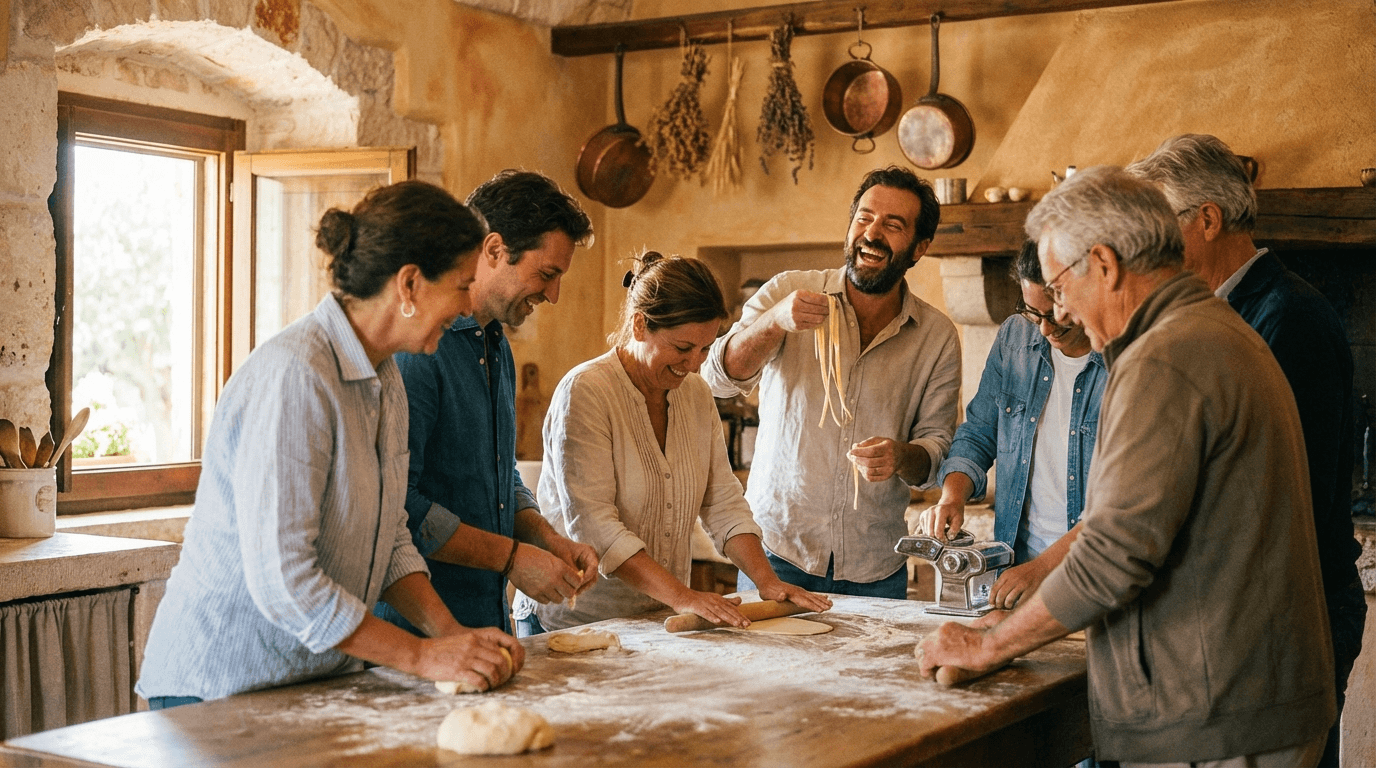
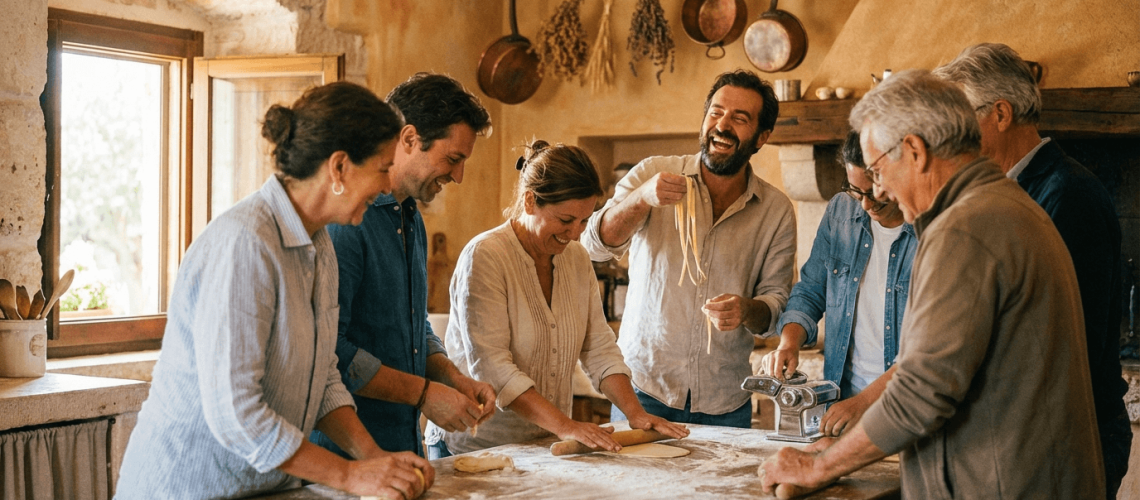
In regions like Emilia-Romagna or Tuscany, cooking is not a performance. It is a collective responsibility. Ingredients are respected. Roles emerge naturally. Timing matters.
A well-facilitated cooking experience requires teams to plan without over-planning. To communicate without instruction. To adapt when things go wrong.
Who takes initiative?
Who listens?
Who supports without controlling?
These dynamics surface quietly, without artificial pressure.
Unlike competitive games, cooking does not produce winners and losers. It produces a shared outcome. Either the meal comes together, or it does not. Everyone is accountable to the group.
This is why cooking, when framed correctly, functions as a mirror. It reflects how a team operates when no one is assigned authority, and success depends on mutual awareness.
Italy’s culinary culture adds depth to this process. Regional traditions in places like Bologna, Modena, or rural Umbria emphasize continuity and care. Recipes are passed down, not optimized. Precision exists, but not obsession.
Teams often recognize themselves in this contrast.
Why the region shapes the outcome
Not all Italian settings produce the same effect. A cooking experience in a mass-market tourist environment leads to performance. People follow instructions. They aim to impress.
The same activity in a private farmhouse in Puglia or a historic villa in the hills outside Florence creates a different atmosphere. Time stretches. Mistakes are tolerated. Conversation deepens. Distance from urban urgency matters.
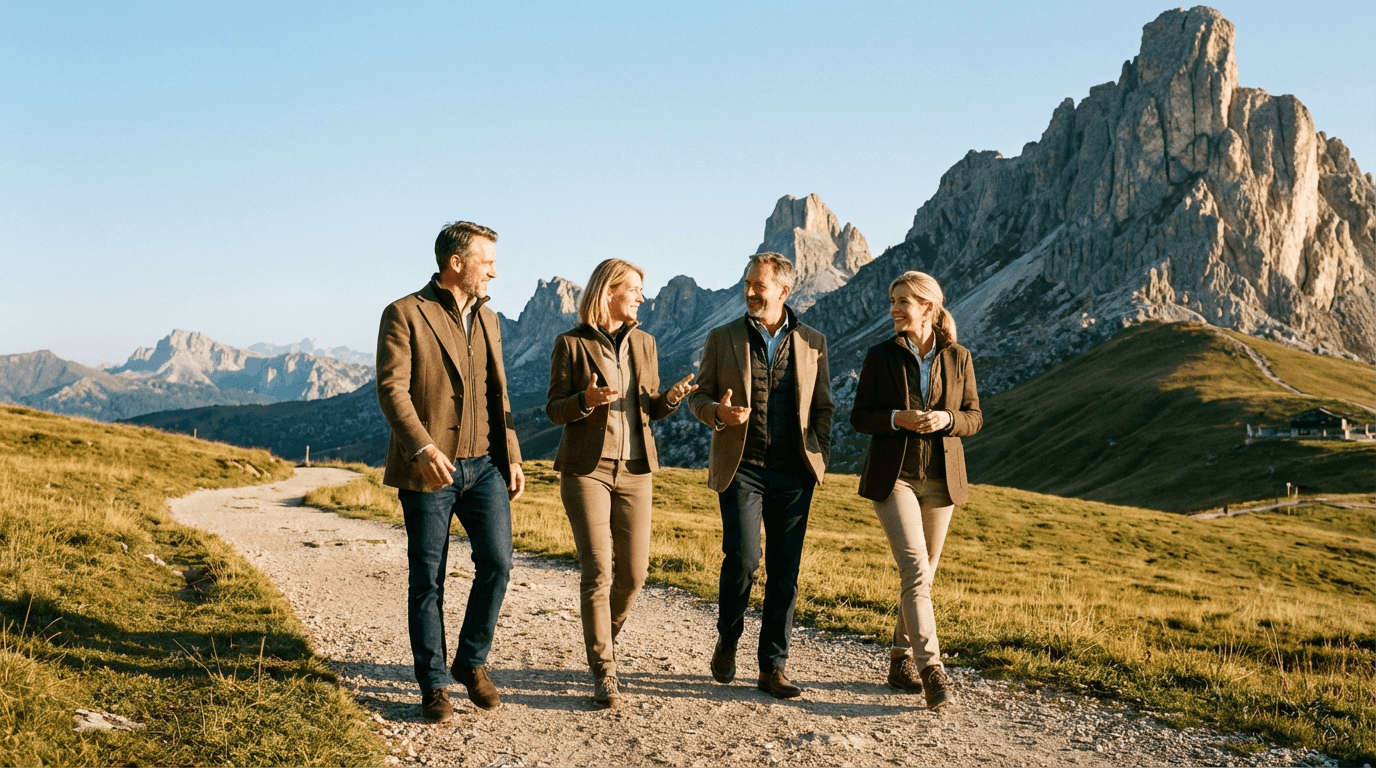
Regions like South Tyrol introduce another dimension. Here, structure and calm coexist. Activities such as hiking or alpine cooking emphasize preparation, pacing, and collective responsibility. The environment demands attention. Shortcuts are not rewarded. Sicily, by contrast, introduces complexity. Ingredients, traditions, and rhythms are layered. Activities unfold less predictably. Teams are challenged to navigate ambiguity rather than control it.
These differences are not aesthetic. They shape behavior. Choosing the right region is therefore not a logistical decision. It is a strategic one
From entertainment to intentional design
What distinguishes effective team building in Italy is not the originality of the activity, but the coherence of the design. An activity should be embedded within a wider narrative.
Why are we here? What do we want to observe? What do we want to strengthen?
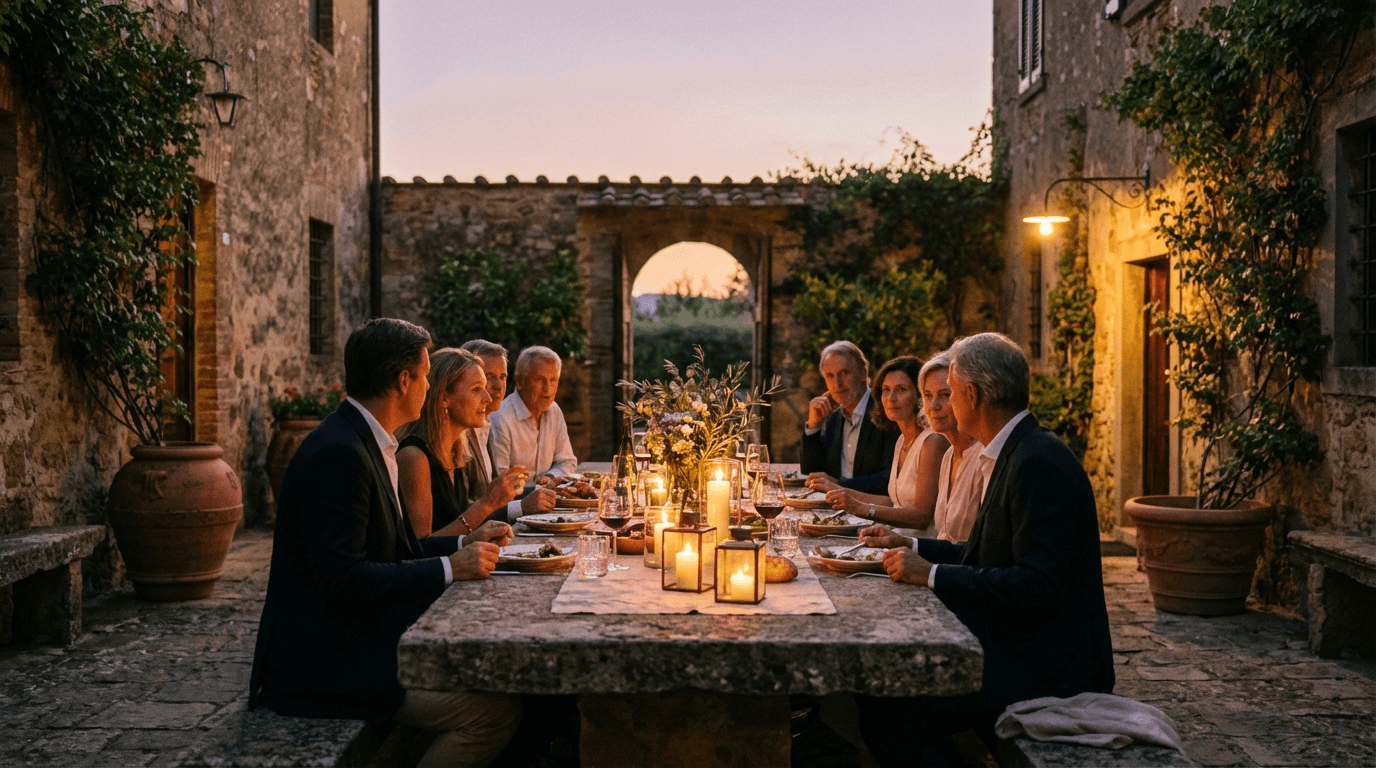
This does not require formal workshops or abstract reflection sessions. Often, it is enough to design the sequence carefully. Arrival without rush, shared preparation rather than immediate consumption, moments of silence alongside conversation, a closing meal that is not rushed. Italy supports this sequencing naturally. Many locations are designed for gathering, courtyards, long tables, kitchens that invite participation.
When these elements are orchestrated deliberately, the activity becomes a container for change.
The role of facilitation and experience
There is a difference between providing an activity and holding a space.
Experienced facilitation does not direct behavior. It notices it. It creates conditions where teams can see themselves more clearly.
This is especially important in Italy, where hospitality is generous and abundant. Without guidance, teams may slip into passive enjoyment. Comfortable, but unchanged.
A skilled partner understands when to intervene and when to step back. When to let a conversation unfold. When to adjust the environment quietly.
This kind of experience is rarely visible in proposals or programs. It reveals itself in outcomes.
Teams leave with shared reference points. Private jokes that carry meaning. A renewed sense of how they function together.
These effects are subtle, but durable.
Private groups and the same principle
The same logic applies to private occasions.
Families, friends, or multigenerational groups often assume that shared enjoyment is enough. In many cases, it truly is.
But when there is a desire for reconnection, reconciliation, or transition, the activity matters.
Cooking together in a family-run masseria in Puglia creates a different dynamic than a restaurant reservation. Walking the vineyards of Piedmont together invites conversation that would not emerge at home.
Italy offers these opportunities generously. But again, impact depends on design.
The most meaningful private experiences are not planned around spectacle. They are planned around participation.
What remains after the experience
The real measure of team building in Italy is not how it feels in the moment. It is what remains afterward.
Do conversations change? Do decisions come more easily? Is there a renewed sense of shared responsibility?
When the activity has been chosen and designed with intention, these shifts occur quietly. They do not need to be named. Italy, with its emphasis on continuity, tradition, and shared effort, supports this kind of lasting effect.
But it does not guarantee it. The guarantee comes from understanding that activities are not fillers. They are instruments.
Choosing with clarity
For decision-makers considering team building in Italy, the question is not whether Italy is the right place.
The question is whether the activity has been chosen for the right reason.
A well-designed activity clarifies roles. It surfaces patterns. It strengthens connection without forcing it.
This is what transforms a retreat from a pause into a turning point.
If you are considering team building in Italy, it may be worth reflecting on what you want the activity to make visible, not just enjoyable. A conversation about intention often changes the outcome more than any change of location.