
Most leadership retreats are well intentioned. The agenda is carefully prepared, sessions are thoughtfully designed, and external facilitators are often brought in to add structure and momentum. However, many CEOs still leave with a quiet sense that something did not fully land.
The conversations were good and the energy was present, yet clarity fades faster than expected. Alignment loosens. Decisions that felt solid in the room become harder to sustain once everyone returns.
This is rarely a failure of leadership capability. It is more often a failure of context.
Why Leadership Retreats Matter More Today
Leadership today is exercised under constant pressure. Organizations move faster, teams are more distributed, and decision-making happens across time zones and fragmented attention. CEOs are expected to provide direction, stability, and confidence while operating inside permanent uncertainty.
In this environment, leadership retreats are no longer symbolic moments. They are functional tools. They are meant to reset focus, strengthen alignment, and create conditions for better decisions.
Yet many retreats are still planned as if content alone carries the outcome. The sequence is usually format first, location later. That approach feels efficient, but it is incomplete.
The problem with format-first thinking
Formats are visible and controllable. Agendas, workshops, sessions, and exercises can be planned, measured, and optimized. Location, by contrast, is often treated as a neutral container, simply a place where the “real work” happens.
However, leadership thinking does not occur independently of its surroundings. Environment shapes behavior before the first conversation begins. It influences how leaders arrive, how open they are, and how much distance they feel from daily roles, hierarchies, and routines.
A familiar setting reinforces familiar patterns. A different environment interrupts them quietly.
When location is reduced to logistics, retreats risk becoming well-executed repetitions rather than genuine resets.
A shift in perspective: location as a strategic variable
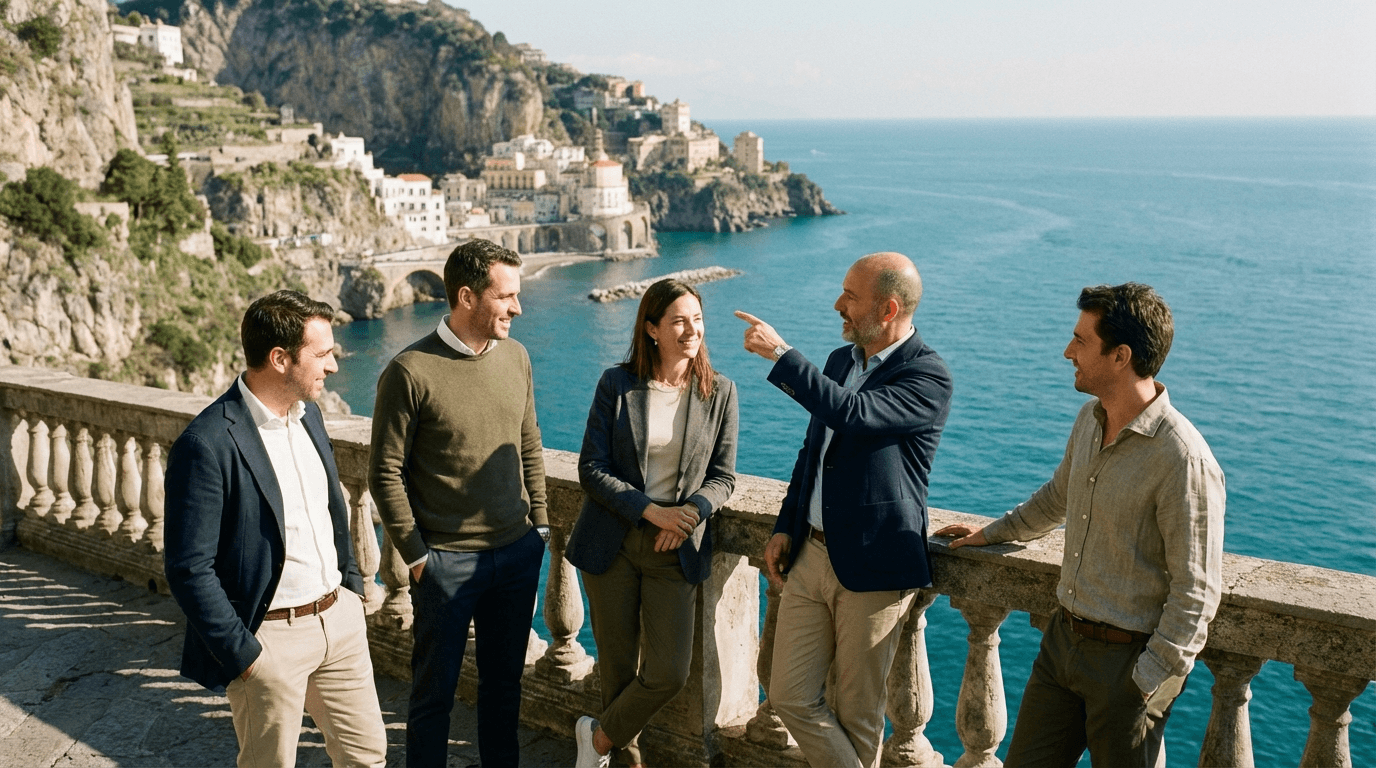
A more useful way to approach leadership retreats is to invert the logic. The purpose of a retreat is not to do different things, but to think differently together.
Format supports that goal, but it does not create it. Location does. This is where leadership retreats in Italy deserve a more precise conversation, one not centered on aesthetics or lifestyle, but on function. Italy, when chosen deliberately, provides environments that change pace, perception, and interaction without demanding attention. That distinction matters.
Why Italy works when used intentionally
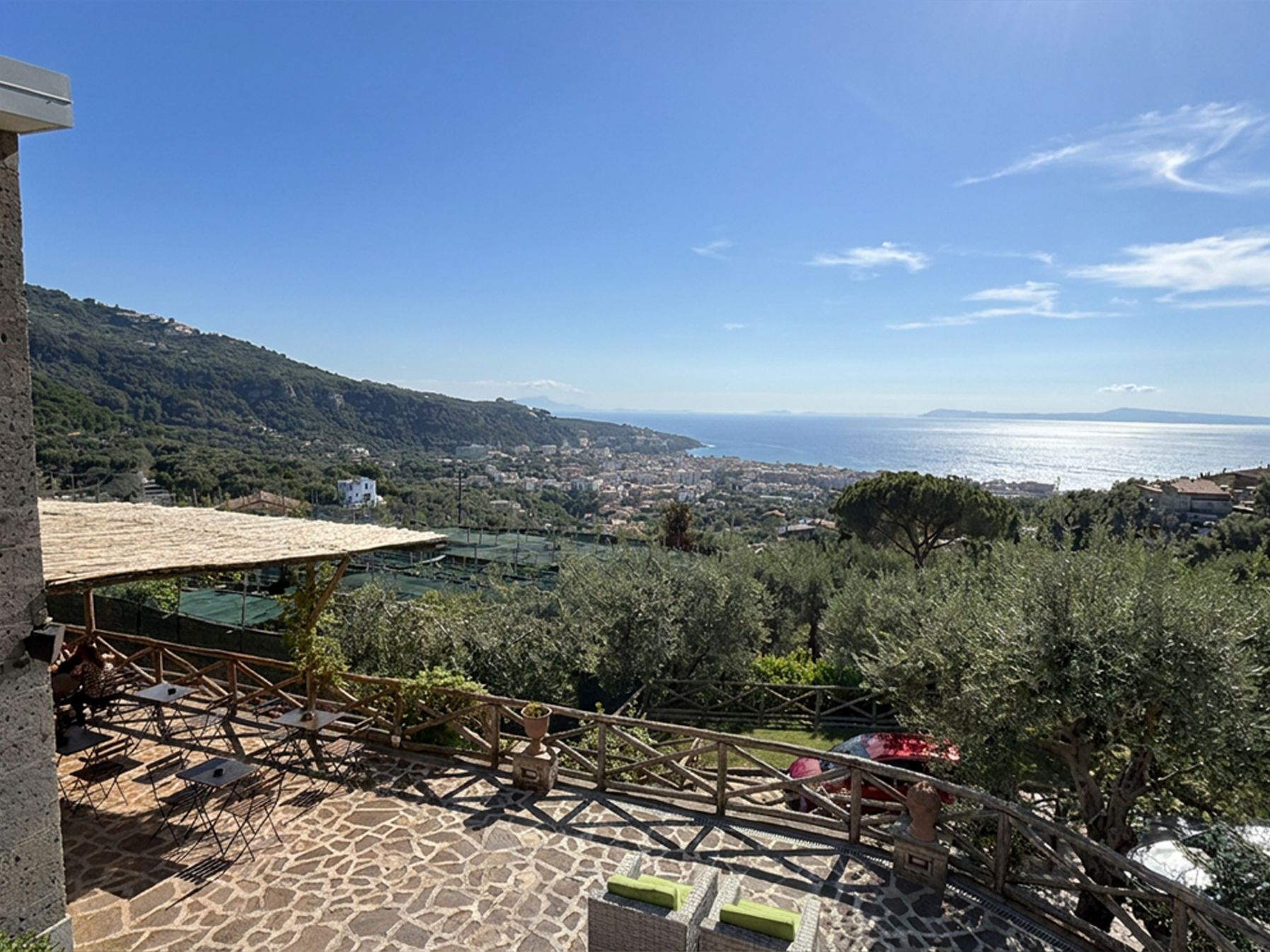
Italy does not impose itself. Its environments tend to slow rhythm without feeling restrictive. Time expands naturally. Meals are structured but unhurried, and conversation flows without being forced.
In regions such as Tuscany, Umbria, or parts of Piedmont, leadership teams are removed from the cues that reward urgency and reaction. The landscape establishes a quieter baseline, supporting strategic thinking in a way no agenda item can.
Trust follows a similar pattern. Italian social culture encourages layered interaction, where informal moments are not interruptions to the work but extensions of it.
Alignment often happens between sessions, not only during them. This is not accidental. It is environmental.
What this looks like in practice
Consider a leadership team meeting in a major business city. The pace is efficient, discussions stay sharp, decisions are framed quickly, and productivity is high.
Now place the same team in a rural setting outside Florence for several days. Even with an identical agenda, the dynamic shifts. Leaders arrive differently. Conversations slow down. Long term questions surface earlier, and defensive positions soften without being challenged directly.
Or imagine a coastal location in Liguria, where structured morning sessions are followed by unplanned walks and shared meals. One-on-one conversations emerge naturally, and alignment happens sideways rather than head-on.
The outcome is not more inspiration. It is more clarity.
Location as an invisible leadership instrument
CEOs often ask how to make leadership retreats more effective. The instinct is usually additive: more sessions, more frameworks, more facilitation.
In many cases, the more effective move is subtractive. Choosing an environment that removes noise without isolating people, supports focus without imposing formality, and allows leaders to step out of performance mode and into reflection can be far more impactful.
Italy offers this balance when location is selected with discipline. Not every Italian setting works. Urban centers behave differently from rural ones. Coastal environments create different dynamics than mountainous regions. Seasonality, group size, and intent all matter.
This is why location choice is not aesthetic. It is strategic.
What becomes clearer for CEOs
When location is treated as a leadership tool, several shifts occur. Previously, retreats aimed to move through an agenda. Now, they create conditions for better judgment. Alignment moves from something discussed to something experienced. Motivation shifts from a temporary peak to sustained clarity.
This shift is subtle but durable. It is also the difference between a retreat that feels good and one that actually changes something.
The role of an experienced partner
Designing leadership retreats in Italy requires more than local access. It requires judgment. This includes knowing which environment supports which leadership objective, understanding when distance helps and when proximity matters, and designing rhythm so that location does its work quietly rather than competing with content.
This is where experienced partners differentiate themselves from providers. Italiaplus approaches leadership retreats as integrated systems, where location, structure, program flow, and logistics are developed together rather than layered after the fact.
The result is not a better itinerary. It is a more effective leadership outcome.
Why format still matters, just later
None of this suggests that format is irrelevant. It is simply secondary. Once the right environment is in place, format becomes more precise and less compensatory. Sessions become fewer and more focused, facilitation becomes lighter, and leaders take greater ownership of outcomes.
The sequence matters. Location first, format second. This is the quiet logic behind leadership retreats that produce lasting effect.
A final reflection
If you are planning a leadership retreat and sense that previous formats delivered energy but not durability, the question may not be what to change in the agenda. It may be where the thinking is being asked to happen.
If leadership clarity is the true objective, it is often worth reflecting on whether the chosen environment supports the kind of thinking and dialogue you are asking for. A conversation about location, before format, tends to change the entire design logic.