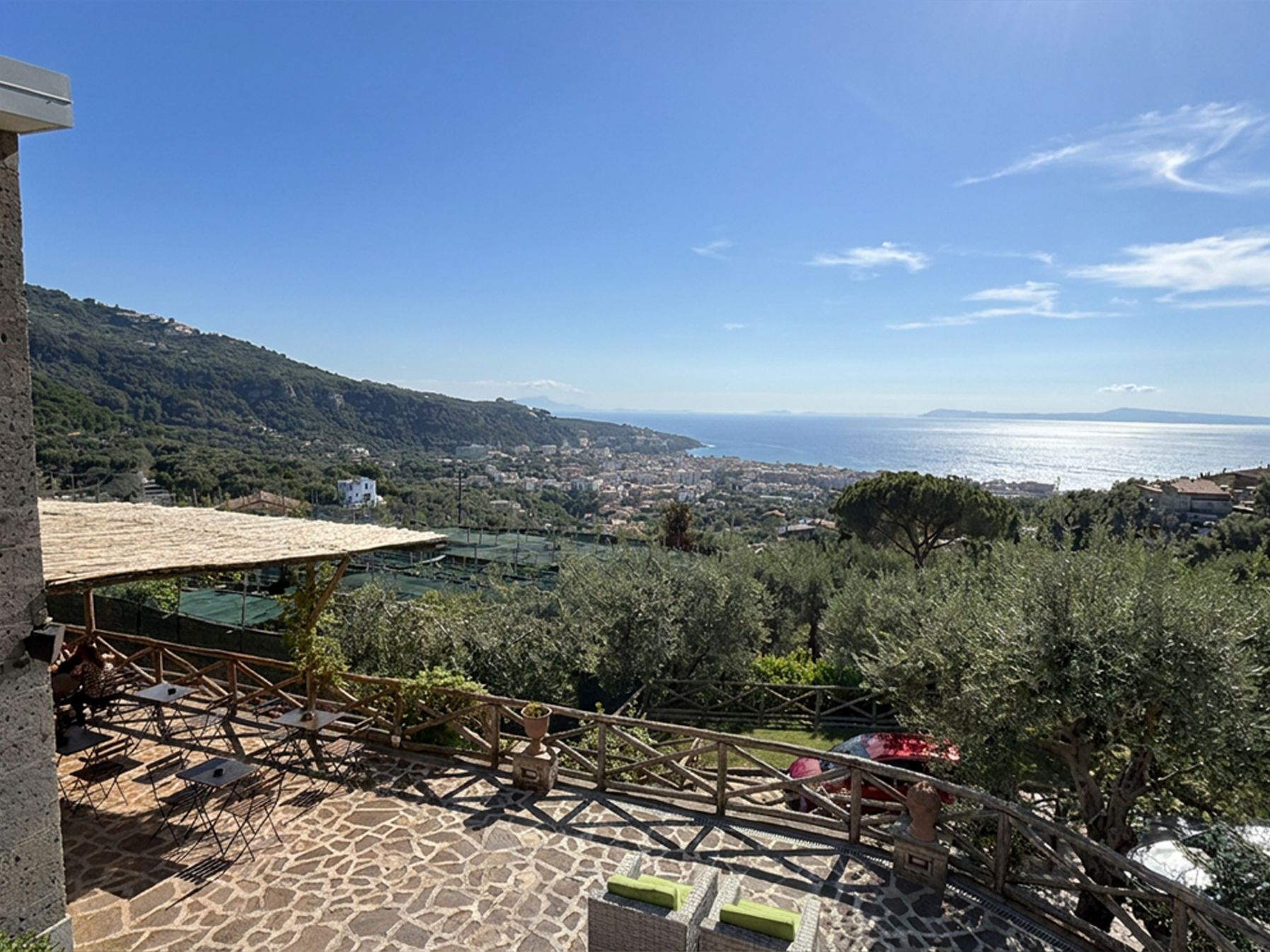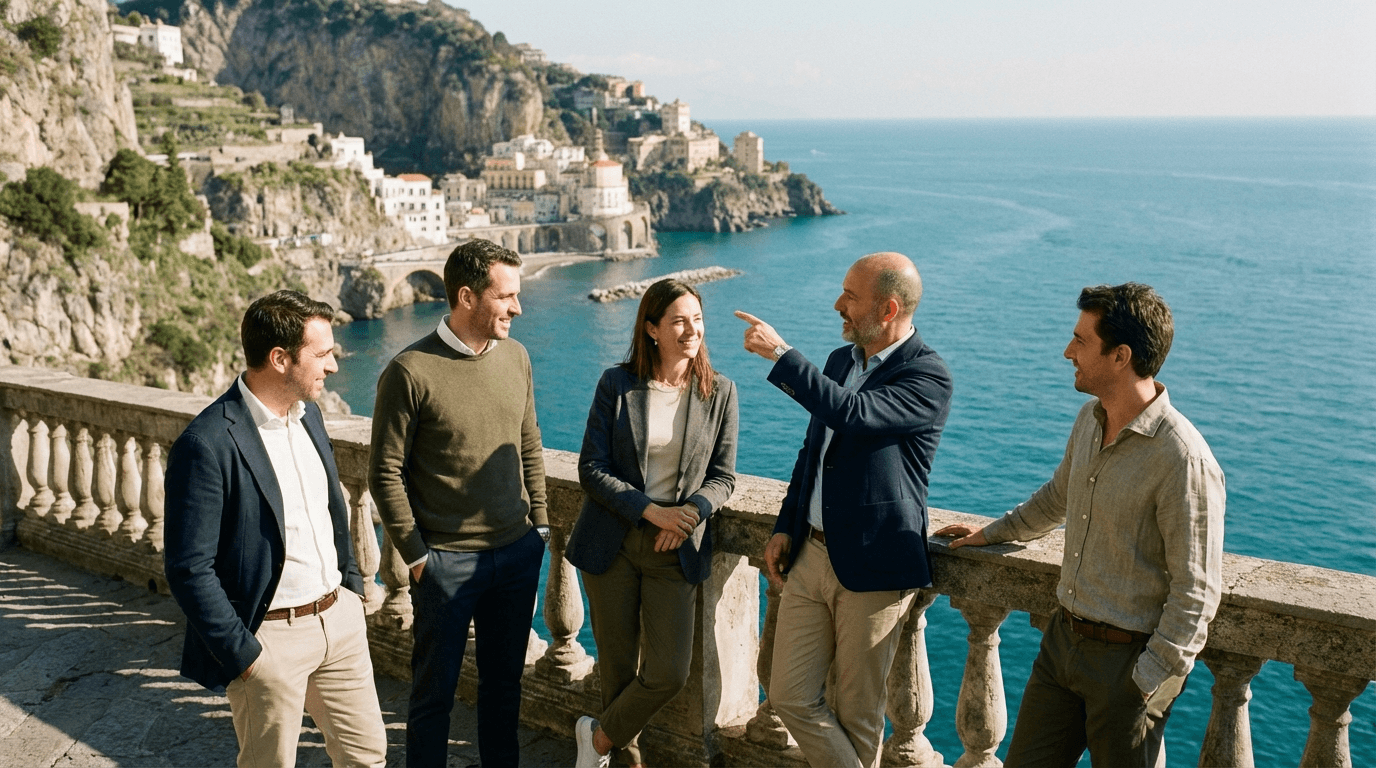
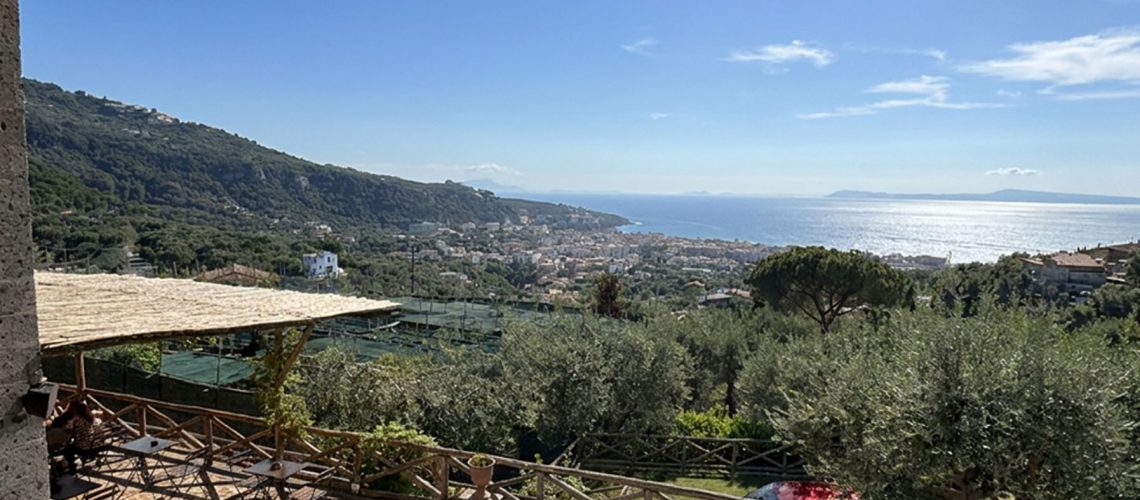
The Bay of Naples packs history, volcanic landscapes, islands and one of Italy’s liveliest urban cultures into a small area. Naples, Capri, Ischia and Procida each have a very different character, yet all are easily reached by ferry from the Molo Beverello port in Naples. The best time to visit is April to June and September to October. Groups and corporate trips benefit from early planning, as ferries, restaurants and accommodation book up quickly in high season.
Bay of Naples: Key Practical Information at a Glance
| Detail | Information |
| Region | Campania, Southern Italy |
| Airport | Naples-Capodichino (NAP), approx. 15 min from the city centre |
| Language | Italian (English understood in tourist areas) |
| Currency | Euro (EUR) |
| Best time to visit | April to June, September to October |
| Recommended length of stay | 4–5 days (Naples) to 8–10 days (incl. islands and coast) |
| Ferry Naples to Capri | 20–40 min (fast boat), 80 min (ferry), from Molo Beverello |
| Ferry Naples to Ischia | 45–90 min, from Molo Beverello or Pozzuoli |
1. Why is the Bay of Naples worth a trip?
The Bay of Naples lies in southern Italy on the western coast of the Campania region, forming a wide inlet of the Tyrrhenian Sea. Between the city of Naples, Mount Vesuvius and the islands of Capri, Ischia and Procida stretches a coastal landscape that has drawn travellers for centuries.
Even in antiquity this area was considered special. Greek settlers founded their first colonies here in the 8th century BC; later, under Roman rule, Naples grew into a cultural centre. Wealthy Romans built villas along the coast and spent their summers here.
Visitors encounter more than history. Markets, cafés, small workshops and a rich culinary tradition shape daily life. The international airport of Naples-Capodichino is only about 15 minutes from the city centre, which makes the region as attractive for group travel to Italy as for independent travellers.
2. What makes Naples special as a destination?
Naples is one of the oldest continuously inhabited cities in Europe. Founded in the 5th century BC by Greek settlers as “Neapolis”, its historic centre was added to the UNESCO World Heritage list in 1995. Within a compact area, the old town brings together an exceptional density of monuments and cultural layers.
Among the best-known sites are the Cathedral of San Gennaro, the Cappella Sansevero with its famous “Cristo Velato”, and the Castel Nuovo by the harbour. Historic layers continue beneath the city too: grottoes, aqueducts and underground chambers run throughout the centre.
One of the most famous streets is Spaccanapoli. It runs like a straight line through the historic centre and connects many important sites, most of which can be reached on foot from here.
2.1 Which neighbourhoods are best for nightlife in Naples?
Much of the city’s nightlife is concentrated in the Chiaia district, where bars, smaller clubs and modern venues line elegant streets. Spots such as L’Antiquario combine classic elements with a contemporary feel, while rooftop venues like Terrazza Calabritto offer views across the city’s rooftops, Mount Vesuvius and the sea.
Larger clubs and event spaces such as Arenile di Bagnoli sit deliberately outside the historic core, in the western areas around Bagnoli and Pozzuoli. Getting there requires organised transport, often by taxi or shuttle.
2.2 What role does music play in Naples’ culture?
Naples is regarded as one of the birthplaces of European opera. The Teatro di San Carlo, opened in 1737, is the oldest continuously active opera house in the world and remains one of Europe’s most important stages. Attending a performance means experiencing not only the music but a space that is itself part of history.
Naples has also produced its own song tradition, the so-called “Canzone Napoletana”. Pieces such as “O Sole Mio” and “Funiculì Funiculà” are closely tied to the image of the city, carrying lightness, melancholy and intensity all at once.
3. What should you make sure to eat in Naples?
Food is no minor matter in Naples; it is a central part of daily life. Markets, small trattorias and open kitchens define the streetscape, and dishes emerge from a combination of quality, seasonal availability and lived tradition.
Typical dishes of the city:
- Ragù napoletano: a slow-braised tomato sugo with meat, cooked over several hours at low heat.
- Sfogliatella: the city’s classic pastry, crisp and flaky (riccia) or short-crust (frolla), filled with ricotta and candied fruit.
- Babà al rum: a soft cake soaked in rum syrup, almost a fixture of the local dessert culture.
- Frittura di Paranza: freshly fried small fish, served simply with salt and lemon.
- Limoncello: made from lemon peel, traditionally drunk well chilled after a meal.
Insider tip: The Mercato di Porta Nolana in the east of the old town shows a side of Naples shaped by everyday life. Fresh fish, local produce and the market atmosphere make this an authentic window into the city’s food culture.
3.1 How does entry work at Trattoria Nennella?
Trattoria Nennella in the Quartieri Spagnoli is known for its lively atmosphere, with waiters who sing, dance and get guests to join in. Advance reservations are not possible. Instead you add your name to a waiting list on Piazza Carità, then either wait outside the restaurant or return at the time given. Once your name is called out across the square, it is time to go in.
4. Where do you eat the best pizza in Naples?
In Naples, pizza is not one dish among many but a fixture of the city. Pizza as we know it today took shape in Naples during the 18th and 19th centuries: tomatoes from the New World were viewed with suspicion at first, before ordinary people began to use them. A true Neapolitan pizza is soft and slightly moist in the centre, which is not a flaw but part of the traditional preparation.
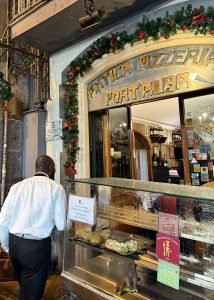
Well-known addresses include L’Antica Pizzeria da Michele, known for its deliberately limited menu, as well as many smaller, less crowded pizzerias in the old town. The typical “pizza a portafoglio” is folded and served in the hand, available as street food from as little as €2.50.
Insider tip: Avoid the midday rush. In the evening the ovens run consistently hot and the experience is more relaxed.
5. What is the Napoli Sotterranea and is it worth a visit?
Beneath the streets of present-day Naples lies a far-reaching labyrinth of tunnels and cavities. The Greeks began quarrying the tuff stone; the Romans later used the spaces as aqueducts and water reservoirs. During the Second World War many areas served as air-raid shelters. Today visitors can tour parts of this underground world.
Insider tip: Guided tours start at Piazza San Gaetano, among other points. Skip-the-line tickets are available from €18.00 and should be booked in advance because of the limited entry slots. The early morning hours offer the quietest atmosphere.
6. What can you experience in the Quartieri Spagnoli?
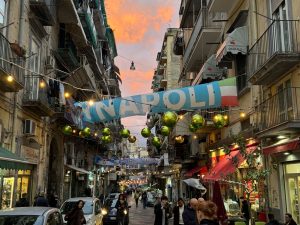
Just a few minutes from Via Toledo, a very different Naples begins. The Quartieri Spagnoli are among the city’s most authentic districts: narrow alleys, tightly packed houses and intense street life define the scene. Washing lines stretch from window to window between the buildings, and private and public life blur into one another.
6.1 Why is Maradona still a symbolic figure in Naples today?
Diego Maradona is far more than a former footballer in Naples. When he joined SSC Napoli in 1984, it marked a turning point for the city, which had long been seen as an underdog in Italian football. With Maradona, the club won its first league titles in 1987 and 1990. For many Neapolitans, that success stood for recognition and self-confidence.
When Maradona died in 2020, the city responded with extraordinary collective grief. This bond is still visible today, especially in the Quartieri Spagnoli: murals show him with a halo, and small shrines remember him with candles, jerseys and personal items. A walk through the alleys is one of the most striking ways to understand Naples today.
7. Which day trips are worth taking around the Bay of Naples?
Pompeii
Pompeii is one of the best-known historic sites in the region. The city was buried by the eruption of Mount Vesuvius in AD 79 and thereby preserved for centuries. To this day it offers an exceptionally direct insight into everyday life in Roman antiquity. Information about the site, opening hours and current excavations can be found on the official website of the Archaeological Park of Pompeii.
Herculaneum (Ercolano)
Herculaneum also lies at the foot of Mount Vesuvius and was destroyed by the same eruption. Compared with Pompeii the site is smaller, but it is considered better preserved in many areas, with buildings, wall paintings and structures often visible in greater detail.
Sorrento
Sorrento lies at the southern end of the bay and feels quieter, more structured and more elegant than Naples. The town serves as an important departure point for ferries to Capri and is known for its lemons and world-famous limoncello.
8. What should you experience on Capri?
For many travellers, the special appeal lies in how closely the city, islands and coastal landscape are connected. The crossing to Capri departs from the Molo Beverello port in Naples or from Sorrento and takes roughly 20 to 80 minutes depending on the ferry or fast boat. In the low season the crossing can often be booked spontaneously; from early May, booking ahead is advisable.
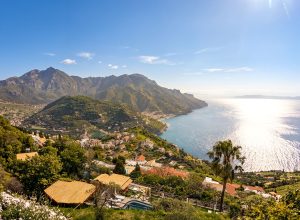
Most visitors reach Capri via the Marina Grande harbour. From there the funicular (funicolare), small buses or taxis lead up to the main town of Capri and the Piazzetta, or on to higher-lying Anacapri.
8.1 What is the difference between Capri town and Anacapri?
Capri town feels lively and elegant, shaped by boutiques, cafés and an international crowd, with activity centred on Piazza Umberto I (the “Piazzetta”). Higher up, Anacapri forms a calm counterpoint: the atmosphere is more open, less dense and more defined by landscape. The chairlift to Monte Solaro, the highest point on Capri, reinforces this change of perspective.
8.2 Is the Blue Grotto worth visiting?
The Grotta Azzurra is one of Capri’s best-known natural wonders. Through an interplay of light and water, the interior of the cave is bathed in an intense, almost unreal blue. Access is by small rowing boats for up to four people. Visitor numbers, waiting times and light conditions all affect how intense the moment feels.
Insider tip: In the early morning the light is especially clear, while visitor numbers rise as the day goes on.
8.3 What lies behind Capri’s handmade sandals?
Handmade leather sandals, known as sandali capresi, have a history on Capri going back to the 1950s, when film stars such as Audrey Hepburn and Grace Kelly had their sandals made here. In small workshops, craftspeople still work by traditional methods, often right in front of visitors. Measurements are taken, materials chosen and each pair tailored individually. A pair is usually made within a few hours, with prices around €250.00.
8.4 What is the story of Villa Jovis?
On the eastern side of the island, high above the cliffs, stands Villa Jovis. The complex served the Roman emperor Tiberius as a retreat, from which he ruled the Roman Empire for several years. The walk there takes about 45 minutes on foot through a landscape of Mediterranean scrub. The ruins bear witness to a place that was once among the most luxurious residences of its time.
8.5 How do you plan a group excursion to Capri?
Capri brings its own demands for groups. Streets are narrow, traffic is limited and many routes can only be covered on foot. What looks manageable on a map often proves more complex on the ground: gradients, waiting times and visitor numbers affect the actual routes more than expected.
Our tip for groups of 10 or more: Arriving by private boat avoids logistical bottlenecks and allows a flexible day, from lunch with a view of the Faraglioni rocks to shopping, an aperitif and a swim stop at a scenic point. Timely, targeted planning makes the difference here, ideally as part of a bespoke corporate event.
9. What does Ischia offer as a destination?
Ischia is the largest island in the Bay of Naples and is often called the “green island”. The name comes from its lush vegetation, which thrives thanks to the mild climate and volcanic soils. Overall the island feels more spacious, more varied and less dense than Capri. Arrival is by ferry or fast boat from Naples or Pozzuoli, with a journey time of about 45 to 90 minutes.
A central landmark is the Castello Aragonese, open year-round from 9:00 in the morning until sunset, with admission at €15.00. The medieval castle sits on a rock off the coast and is reached via a narrow bridge. Within its walls are churches, former monasteries and historic buildings.
9.1 Which thermal baths and hot springs are worth visiting on Ischia?
Ischia is volcanic in origin: hot springs emerge in many places from the ground or directly into the sea, forming the basis for a long medical and cultural tradition dating back to antiquity. Among the best-known thermal parks are the Giardini Poseidon Terme in the Citara bay, with several pools of varying temperatures and views over the bay, and the Negombo thermal park in Lacco Ameno, which is more landscaped in style.
Insider tip: The fumaroles of Sorgeto. On the south coast, hot springs flow directly into the sea, forming natural warm pools between the rocks. Especially in the evening hours, a special atmosphere develops here.
9.2 What culinary specialities does Ischia offer?
Ischia is one of the oldest wine regions in Europe, with Greek settlers already cultivating vines here. The most characteristic grape variety is Biancolella, a white wine known for its mineral structure, light saltiness and fine citrus notes. In the hills around Forio, smaller wineries offer tastings. The combination of local wine, fresh seafood and sea views is one of the region’s most memorable culinary experiences.
10. Why is Procida the most authentic island in the Bay of Naples?
Procida is the smallest of the islands in the Bay of Naples and was for a long time little known outside Italy. That changed in 2022, when Procida was named Italian Capital of Culture. Because the island long stood in the shadow of Capri and Ischia, it has largely preserved its original character.
A different picture emerges from the moment you arrive: along the harbour of Marina Corricella, pastel-coloured houses in shades of yellow, pink, orange and blue stand tightly side by side. Small fishing boats lie in the water, nets are spread out, and many scenes feel less like a tourist image than like an ongoing everyday life.
A special detail is the Limone di Procida: these lemons are noticeably larger than usual varieties and stand out for their intense aroma. They shape the image of the island as part of the landscape, the gardens and everyday use.
Insider tip: Marina di Chiaiolella. On the western side of the island lies this small harbour, noticeably calmer than Corricella. Restaurants often work directly with what is caught locally, offering a quiet, unspoilt side of Procida.
| Island | Character | Best time | From Naples | Ideal for |
| Capri | Glamorous, elegant, international | May, June, Sept | 20–40 min (fast boat) | Day trips, exclusive groups |
| Ischia | Nature-focused, spacious, thermal | April to October | 45–90 min | Longer stays, wellness |
| Procida | Authentic, quiet, colourful | April to October | 35–45 min | Small groups, away from the crowds |
11. Does the Amalfi Coast belong to the Bay of Naples?
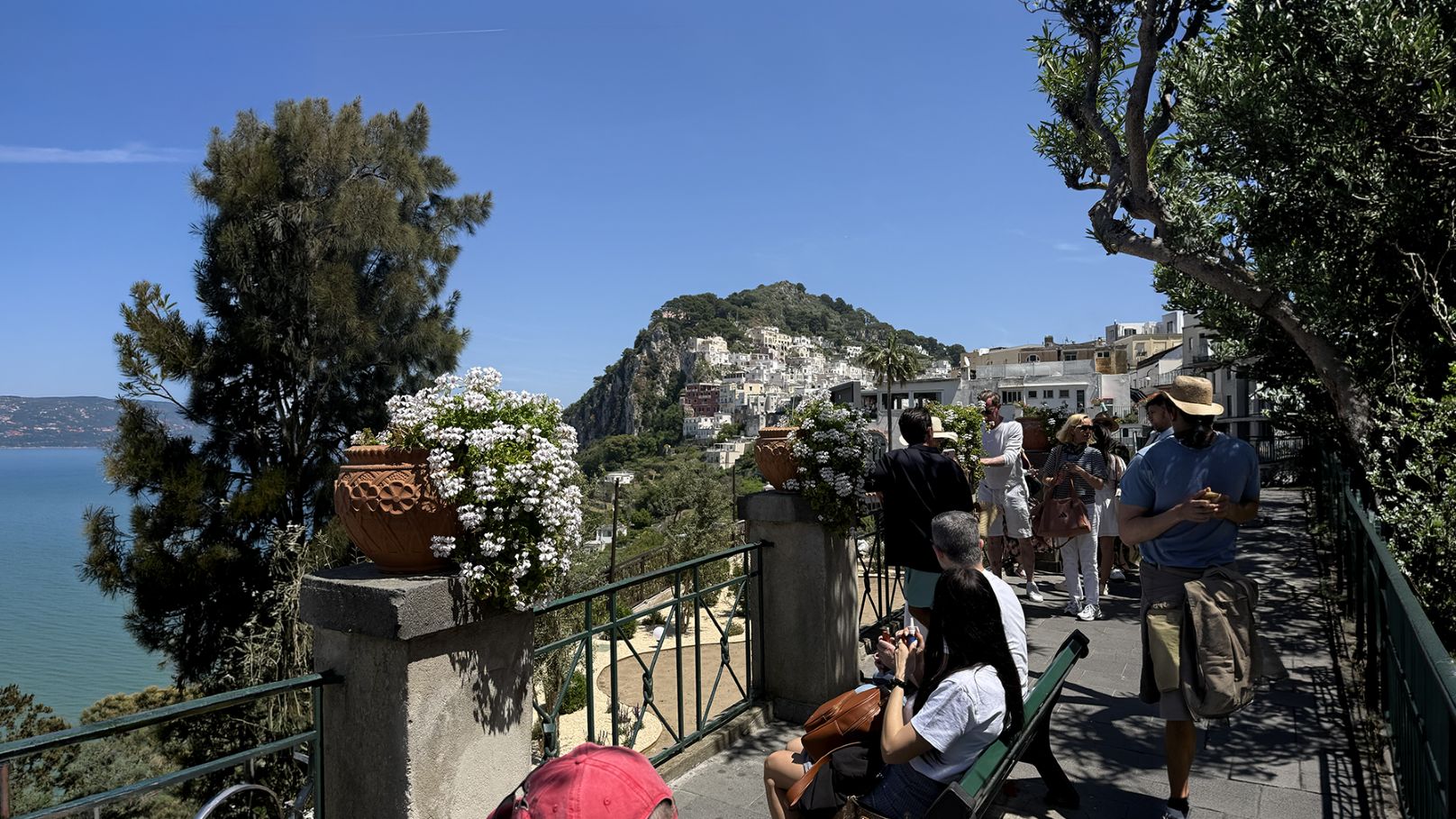
Strictly speaking, the Amalfi Coast lies south of the Bay of Naples. It is often visited on the same itinerary, however, since places such as Positano, Amalfi and Ravello are easily reached via Sorrento or by ferry. Along the coast runs the Strada Statale 163 Amalfitana, one of Italy’s most famous coastal roads.
Positano, with its terraced houses, seems almost part of the mountain itself. Amalfi, with its historic centre and cathedral, forms the cultural heart of the coast. Ravello lies above the coastline and opens up wide sea views from sites such as Villa Cimbrone.
Insider tip: The Path of the Gods (Sentiero degli Dei) runs above the coast and connects Agerola with Nocelle. The trail follows a contour line with a constant view of the sea and offers a perspective quite different from the coastal road.
12. How do you plan a group or corporate trip to the region?
As varied and impressive as the region around Naples is, it is just as demanding to organise. What looks like a compact trip on the map requires far more precise coordination on the ground. Connections between the city, islands and coast are clearly structured but tied to fixed time windows.
Along the Amalfi Coast in particular, roads are narrow, winding and often heavily used: larger vehicles cannot go everywhere, and even short distances can take considerably more time because of traffic and terrain. Restaurant planning also requires foresight, as many establishments in busy places are set up for smaller tables and can only be booked for groups with advance notice.
Late spring and early autumn often offer a balanced rhythm: temperatures are pleasant, visitor numbers moderate, and many regional products are in their harvest season. The summer months of July and August are marked by high demand.
| Period | Temperature | Visitor numbers | Note |
| April – May | 17–22 °C | Moderate | Lemon blossom, calm ferry connections |
| June | 24–27 °C | Rising | Last quiet weeks before high season |
| July – August | 28–32 °C | Very high | Ferries and restaurants heavily booked |
| September | 25–28 °C | Falling | Optimal: warmth without overcrowding |
| October | 19–23 °C | Low | Grape harvest, lower prices |
| November – March | 10–16 °C | Very low | Some ferry connections reduced |
Alongside classic sightseeing, the region offers many experiences that fit well into a team-building trip in Italy: cooking classes in small family businesses, wine tastings with local producers around Mount Vesuvius, visits to lemon growers, boat trips along the coast, hikes on the islands or culinary tours through the old town of Naples.
13. Italiaplus as your partner for travel and events on the Bay of Naples
The Bay of Naples shows how much a trip gains when programme, logistics and personal experiences are aligned. That connection rarely happens by chance; it comes from forward planning and reliable partners on the ground.
If you are planning bespoke trips or events in Naples, on Capri or along the Amalfi Coast and want to place the entire organisation in experienced hands, you are in the right place with us. As a full-service event agency for Italy, we take on the complete concept and execution, from the first idea through the choice of local partners to accompanying you throughout your stay.
14. Frequently asked questions about the Bay of Naples
14.1 When is the best time to visit the Bay of Naples?
Late spring (April to June) and early autumn (September and October) are the most pleasant times to travel. Temperatures are mild, visitor numbers moderate, and many regional products such as lemons and wine are in their harvest season. The summer months of July and August are marked by high demand, with ferries, restaurants and attractions noticeably busier.
14.2 How many days should you plan for the Bay of Naples?
For a first impression, three to four days in Naples with a day trip to Pompeii or Capri are enough. If you want to combine Naples, one island and a stretch of the Amalfi Coast, plan at least six to eight days. Actual travel times are usually longer than the map suggests, because of ferry schedules, terrain and traffic.
14.3 Capri, Ischia or Procida: which island suits which occasion?
Capri is the best-known and most glamorous island, shaped by boutiques, exclusive restaurants and spectacular views, though very busy in high season. As the green island, Ischia offers more space, hot springs and lush nature, suiting longer, quieter stays. Procida is the smallest and most original island, with pastel-coloured houses and an everyday character.
14.4 How do you get from Naples to Capri?
Ferries and fast boats run regularly from the Molo Beverello port in Naples and from Sorrento. The crossing takes between 20 and 80 minutes depending on the connection. In high season from early May, tickets should be booked in advance. For groups or flexible programmes, private speedboats offer a plannable alternative, as they are not tied to fixed schedules.
14.5 What does a visit to the Napoli Sotterranea cost?
Skip-the-line tickets are available from €18.00 for individual adults, with discounts for groups. Because the available entry slots are in high demand, a reservation is recommended. Guided tours start at Piazza San Gaetano, among other points. The early morning hours offer the quietest atmosphere, before larger groups arrive.
14.6 Where do you eat the best pizza in Naples?
Well-known addresses include L’Antica Pizzeria da Michele and smaller pizzerias in the old town. A true Neapolitan pizza is soft and slightly moist in the centre. The typical pizza a portafoglio is folded and served in the hand, available as street food from €2.50. Waiting times can be avoided by steering clear of the midday rush.
14.7 Which day trips are worth taking from Naples?
Classic day trips lead to Pompeii and Herculaneum, both at the foot of Mount Vesuvius and easily reached. Sorrento works well as a stop before a ferry crossing to Capri or as a starting point for the Amalfi Coast. Capri, Ischia and Procida can each be explored on a day trip, though an overnight stay makes the visit considerably more relaxed.
14.8 What should you keep in mind for a group or corporate trip on the Bay of Naples?
Transfers must be coordinated precisely, since ferries, funiculars and coastal roads are tied to fixed time windows. Reservations at popular restaurants are only possible for larger groups with advance notice. For island visits, especially Capri, arriving by private boat is recommended for groups of ten or more. Spring and autumn make coordination considerably easier.

About the author
Founder and Managing Director, Italiaplus
Christine founded Italiaplus in 2015 and has 20+ years of experience in Italian group travel and destination management. She and her team have delivered 250+ events across Italy, welcoming close to 50,000 guests combined. She is a member of the Verband der Veranstaltungsorganisatoren (VDVO), Germany’s largest professional association for corporate event planners.