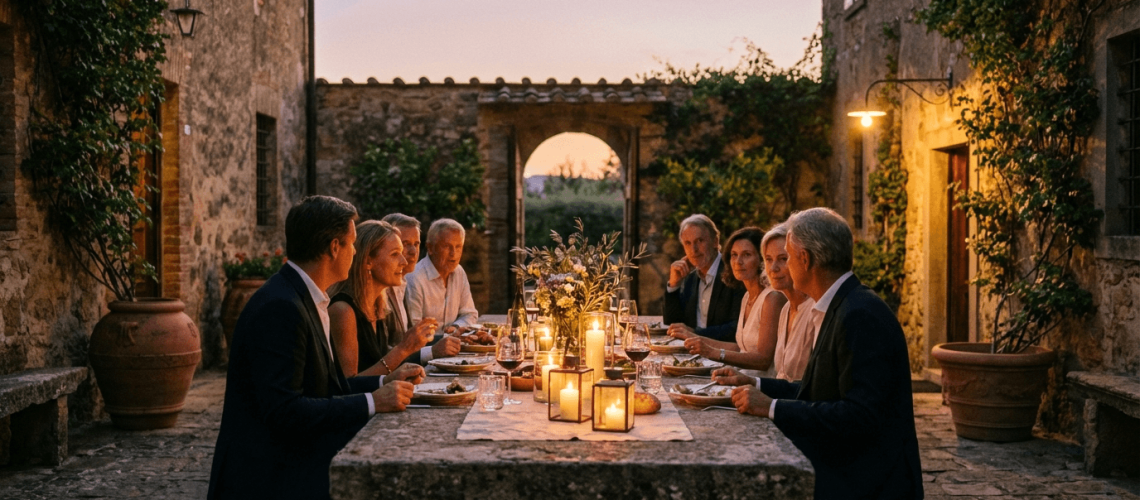
There is a quiet dissatisfaction many business leaders feel after a private event that, on paper, should have worked. The location was exceptional. The logistics were flawless. The setting impressed. And yet, something essential was missing.
What remains afterward is often a blur of moments rather than a shared experience. Pleasant, perhaps. Memorable in fragments. But not meaningful in the way decision-makers increasingly seek.
This tension sits at the heart of many private events in Italy today, especially those designed by and for people accustomed to operating at a high level.
Why This Question Matters Now
Private events have changed. Or rather, expectations around them have.
For many CEOs and founders, time has become the scarcest resource. Attention even more so. When people who run organizations gather privately, whether to mark a milestone, strengthen relationships, or step out of day-to-day pressure, the unspoken hope is clarity. Or reconnection. Or a sense that something real happened.
At the same time, the cultural pressure to perform has intensified. Social visibility, internal optics, and comparison have quietly shifted the purpose of gatherings from connection toward display. Italy, with its extraordinary settings, can amplify this dynamic if one is not careful. The result is a paradox. The richer the context, the easier it becomes to hide behind it.
When Excellence Turns Into Performance
Many private events fail not because they lack quality, but because they confuse quality with impact.
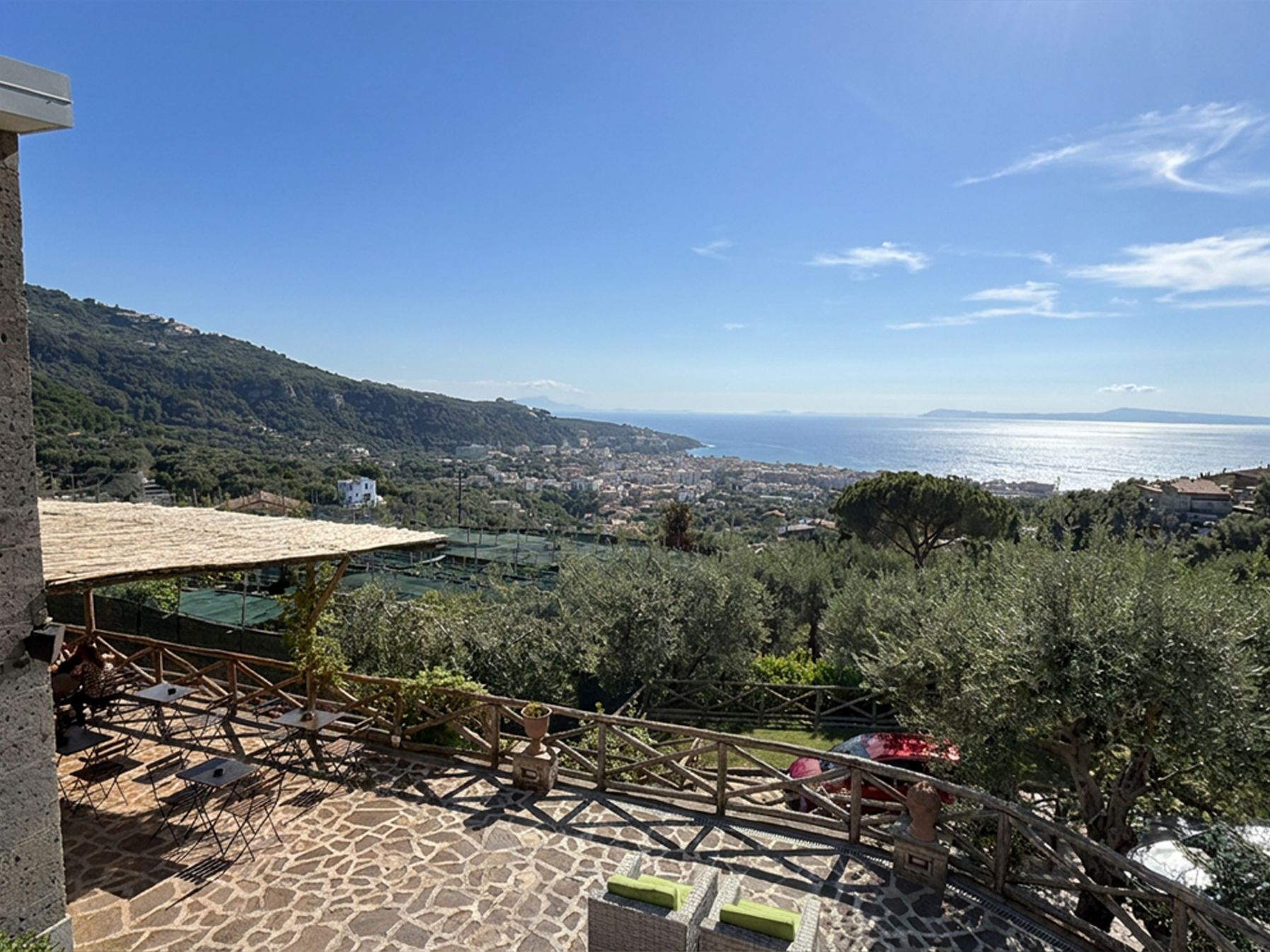
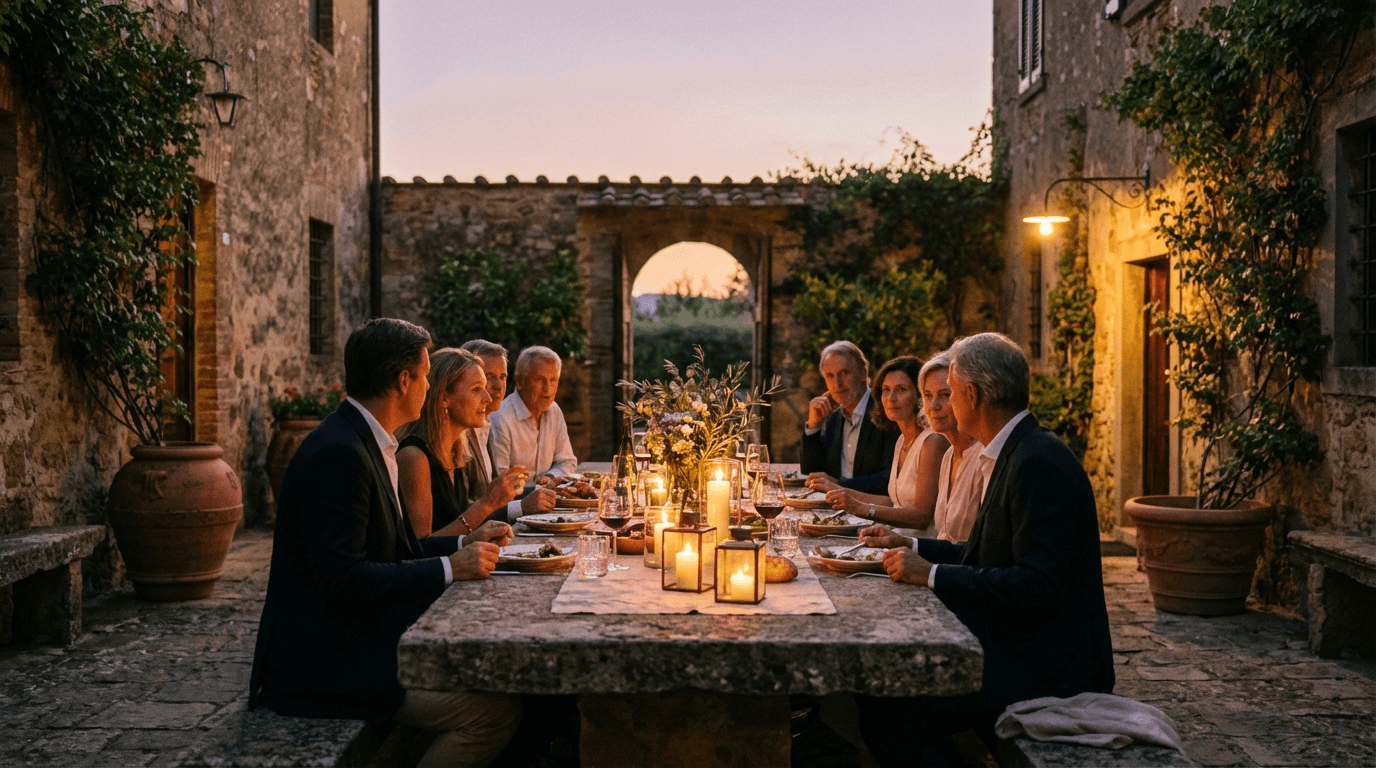
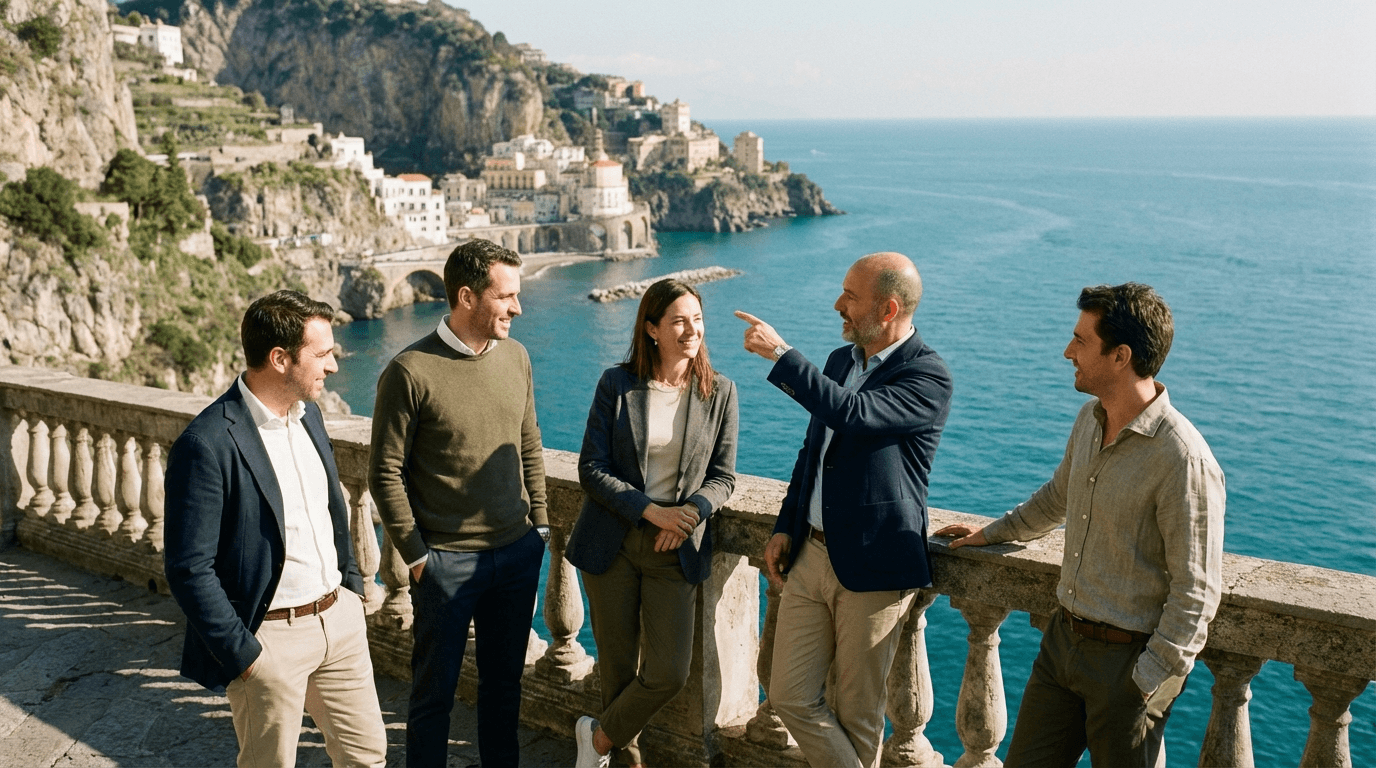
A meticulously restored palazzo on Lake Como. A candlelit dinner in a Tuscan vineyard. A private terrace overlooking the Amalfi Coast. These are powerful settings. But they are not outcomes.
When the environment does all the talking, the gathering itself often has no voice. Conversations stay polite. Roles remain intact. People behave as expected. The event unfolds smoothly, yet nothing shifts. Performance enters quietly. Hosts feel pressure to impress. Guests sense it. Everyone plays along. Italy becomes a stage rather than a context.
The Subtle Difference Between Hosting and Designing
There is a fundamental distinction that changes everything. Hosting is about providing. Designing is about intention.
In meaningful private events in Italy, the question is never “How do we impress?” but “What do we want this gathering to make possible?” That intention might be simple. It might be complex. But it must exist.
In Umbria, this could mean slowing the pace deliberately, using the rhythm of the countryside to allow conversations that never happen in cities. In Venice, it might mean choosing early mornings and closed-door spaces over evening spectacle, letting the city’s quieter intelligence surface. Italy offers depth, but only if the event is designed to meet it.
Reframing the Role of the Setting
Italy is not valuable because it is beautiful. Beauty alone is passive. Italy is valuable because of how it shapes behavior.
The long lunch culture in Emilia-Romagna encourages lingering and layered conversations. The restrained elegance of Piedmont invites reflection rather than display. The structured chaos of Rome reminds people that not everything needs to be resolved immediately.
When private events in Italy are designed with this understanding, the setting becomes an active participant rather than a backdrop. It subtly lowers defenses. It changes posture. It shifts the tone of interaction. This is where performance loses its grip.
Letting Go of the Need to Impress
One of the most difficult moves for business leaders is choosing restraint. Not because they cannot afford more, but because they can.
True confidence shows up in what is intentionally left out. Smaller guest lists. Fewer agenda points. Less visible orchestration. More room for silence, unscripted conversation, and shared experience that is not optimized for documentation.
In Florence, this might look like closing the doors of a historic workshop for a private encounter with craftsmanship, rather than staging a formal reception. In Sicily, it could mean anchoring the event around a single shared table and a regional culinary narrative, instead of a rotating program of activities. Meaning grows where pressure recedes.
When Private Events Become Instruments of Alignment
For CEOs, private gatherings often sit at an intersection of personal and professional life. Friends, partners, peers, long-term collaborators. People who matter, but rarely occupy the same room.
This is where the real opportunity lies. A well-designed private event can quietly recalibrate relationships. It can surface shared values. It can strengthen trust without ever naming it. It can remind people why they choose to stay connected.
These outcomes do not come from entertainment. They come from coherence. Italy, with its layered history and regional identities, offers a natural framework for this kind of alignment. Each place carries a logic. A pace. A way of relating. When those qualities are respected, the gathering begins to feel inevitable rather than produced.
Practical Examples From the Field
A founder hosting a private leadership circle in the Dolomites chose morning walks over keynote-style sessions. The altitude, the silence, and the physical movement changed the tone of discussion. Decisions emerged organically, without pressure.
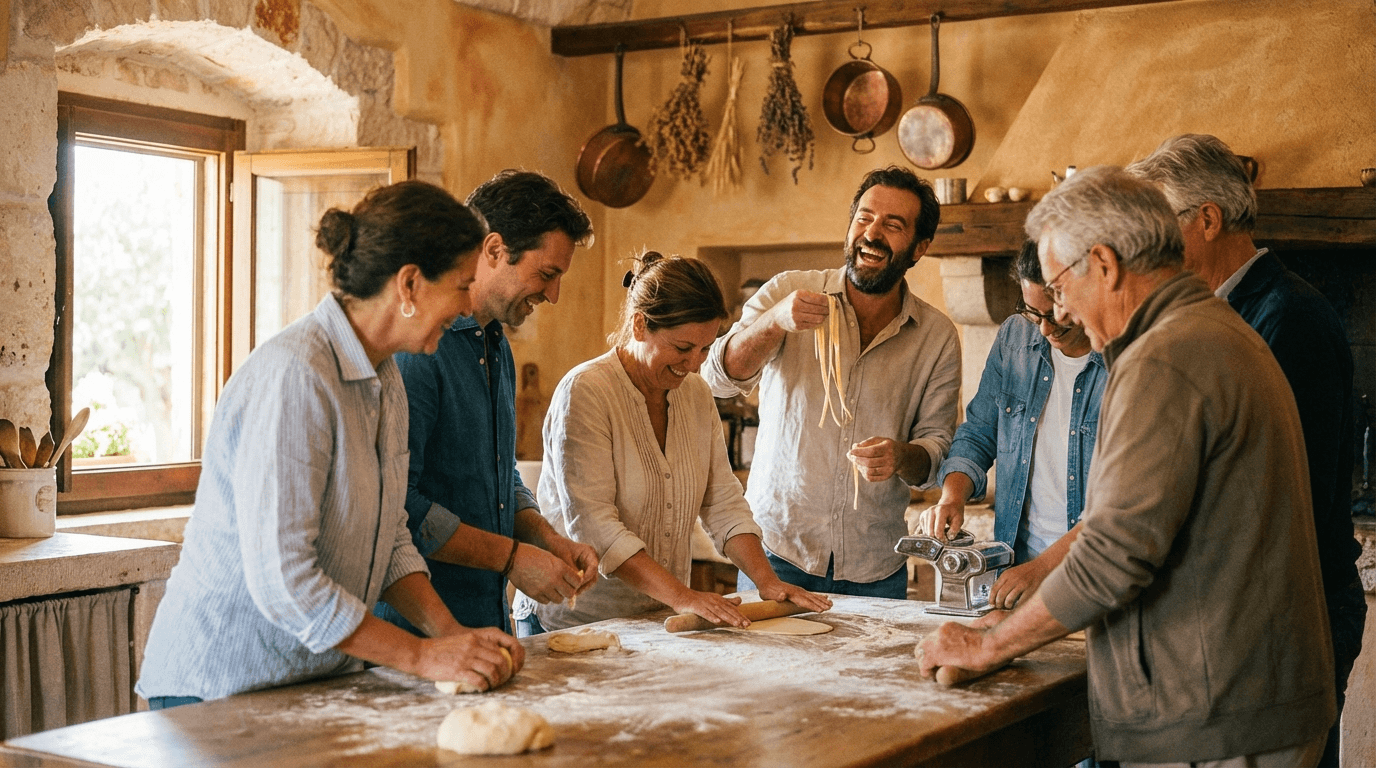
A family-owned company marked a generational transition in Tuscany by centering the event around shared preparation rather than presentation. Cooking together in a rural estate replaced speeches. Conversations unfolded naturally, across age and role.
In both cases, the success of the event was not visible during the event itself. It showed up later, in clarity, in decisions made more easily, in relationships that felt recalibrated. That is the real metric.
The Value Argument Few People Name
At a certain level, the question is no longer about cost. It is about consequence. A performative event consumes energy. A meaningful one generates it. A spectacle fades quickly. An intentional gathering leaves residue.
For business leaders, this residue matters. It affects how people show up afterward. How they remember the relationship. Whether the time spent together becomes a reference point or just another memory.
Private events in Italy can be the difference that lies in whether the event is designed as a statement or as a space.
Choosing the Right Kind of Partner
This shift requires a specific kind of support. Not a supplier of experiences. Not a curator of highlights. But a partner who understands restraint, context, and consequence.
Someone who knows when Italy should speak loudly and when it should remain quiet. Someone who sees logistics as infrastructure, not as the point. Someone who designs from the inside out.
This is where experience matters more than creativity.
If you are considering a private event in Italy and find yourself more interested in what should remain after it ends than in how it will look while it happens, a thoughtful conversation can be a useful next step. Sometimes clarity emerges before any plans are made.