
Most executive offsites fail quietly. Not because the agenda was wrong or the participants were uncommitted, but because the environment worked against the very decisions the offsite was meant to support.
Senior leaders often underestimate how deeply context influences judgment. Familiar meeting rooms reproduce familiar thinking. Hotel conference spaces designed for efficiency encourage speed rather than clarity. Even well-intentioned offsites end up reinforcing existing patterns instead of interrupting them.
This is where the environment stops being a backdrop and becomes a strategic variable. When designed deliberately, executive offsites in Italy create a fundamentally different decision condition. Not because they are beautiful, but because they are structurally different from everyday executive life.
Why decision quality is under pressure right now
Decision-making at the executive level has changed. Leadership teams are navigating layered complexity. Markets move faster. Organizations are more distributed. Decisions carry longer-term consequences, yet are often made under compressed timelines and partial information.
At the same time, many leadership teams operate in environments optimized for responsiveness rather than reflection. Open calendars, continuous digital presence, and constant accessibility reduce the cognitive space required for high-quality judgment.
Offsites are often positioned as a solution to this pressure. Yet many simply replicate the same cognitive constraints in a different location. When nothing essential changes in how leaders think, the venue alone cannot compensate.
Environment is not neutral
Every environment shapes behavior. This is not a philosophical claim but a practical one. Neuroscience, organizational psychology, and decades of leadership practice point to the same conclusion: decision quality is highly sensitive to context.
Familiar environments trigger habitual responses. They activate existing hierarchies, default roles, and unexamined assumptions. Leaders unconsciously shift into performance mode instead of inquiry mode.
Neutral-looking spaces are not neutral at all. They are optimized for predictability. Executive offsites intended to address strategic inflection points require environments that gently disrupt routine cognition without overwhelming it. This is where Italy becomes relevant, not as a destination, but as a decision environment.
What Italy offers beyond the obvious
Italy is often misunderstood in business contexts. It is reduced to beauty, cuisine, and atmosphere. While those elements are present, they are not the reason Italy works so well for executive offsites.
Italy offers structural conditions that are increasingly rare in executive life: distance without disconnection, richness without noise, and continuity without urgency.
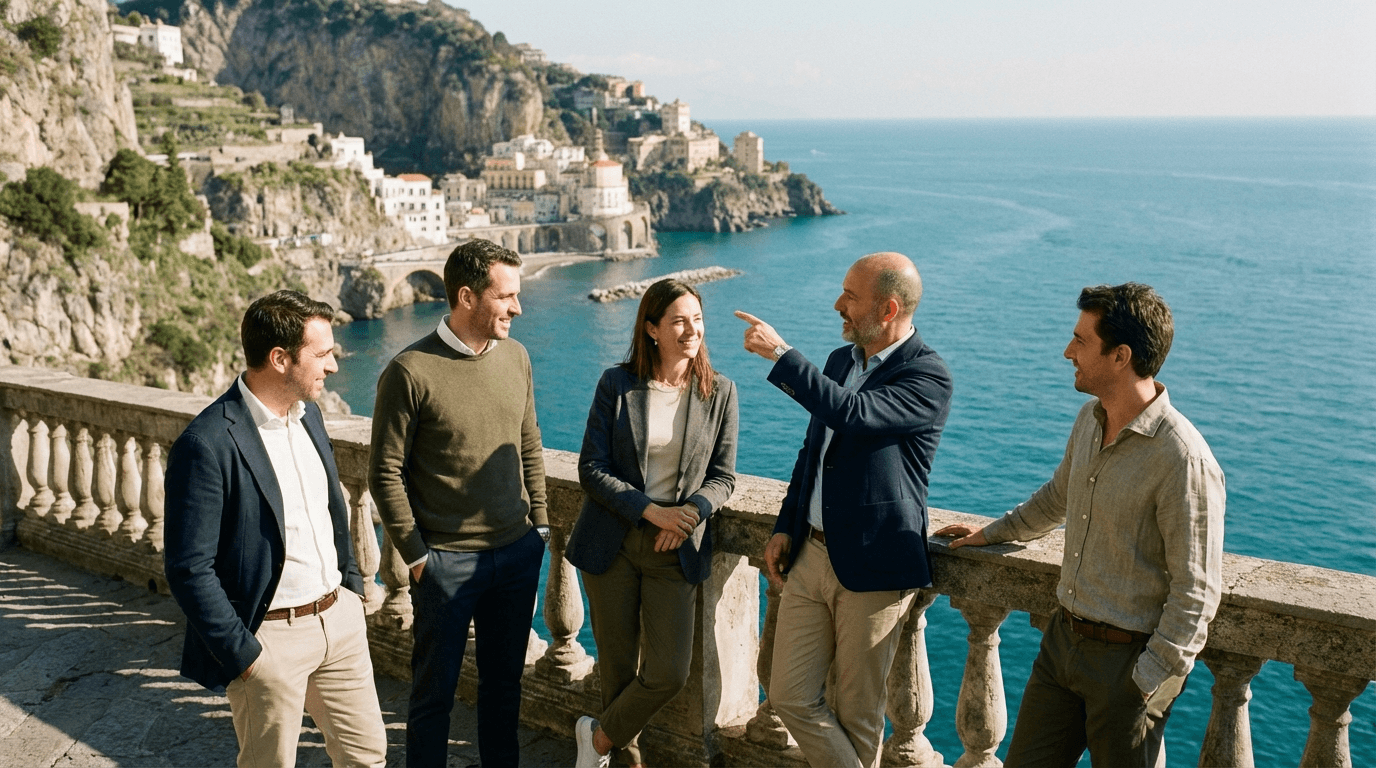
A restored villa in Tuscany, a historic palazzo in Florence, or a lakeside estate near Lake Como creates a subtle but decisive shift. Time feels less compressed. Conversations slow down without losing intensity. Hierarchies soften just enough to allow more honest dialogue.
Importantly, Italy carries cultural depth. Leaders are not entering a blank space, but a context shaped by centuries of craftsmanship, governance, trade, and intellectual exchange. That depth invites seriousness without heaviness. When used intentionally, these environments support better thinking.
The difference between escape and strategic removal
Many organizations miss a critical distinction. Escape removes pressure temporarily. Strategic removal changes perspective.
Most offsites aim for relief by giving leaders space away from daily operations. While restorative, this rarely improves decision quality in a lasting way.
Strategic removal is designed. Leaders are placed in an environment that is deliberately unfamiliar yet grounded, comfortable yet structured, and removed from daily noise while remaining anchored in purpose.
Italy excels here because it does not feel artificial. The environment does not demand attention. It supports presence. This allows leadership teams to engage difficult questions without defensiveness. Strategy discussions become less performative, and trade-offs are examined more honestly. This is where decision quality improves.
Designing executive offsites for judgment, not just alignment
Alignment is often the stated goal of executive offsites. It is important, but incomplete. Alignment without judgment leads to fast consensus around weak decisions.
High-quality offsites focus first on decision conditions. That requires careful design across several dimensions. The rhythm of the days must allow cognitive recovery rather than exhaustion. Sessions should alternate between structured work and unstructured integration. Physical spaces must support both collective dialogue and individual reflection.
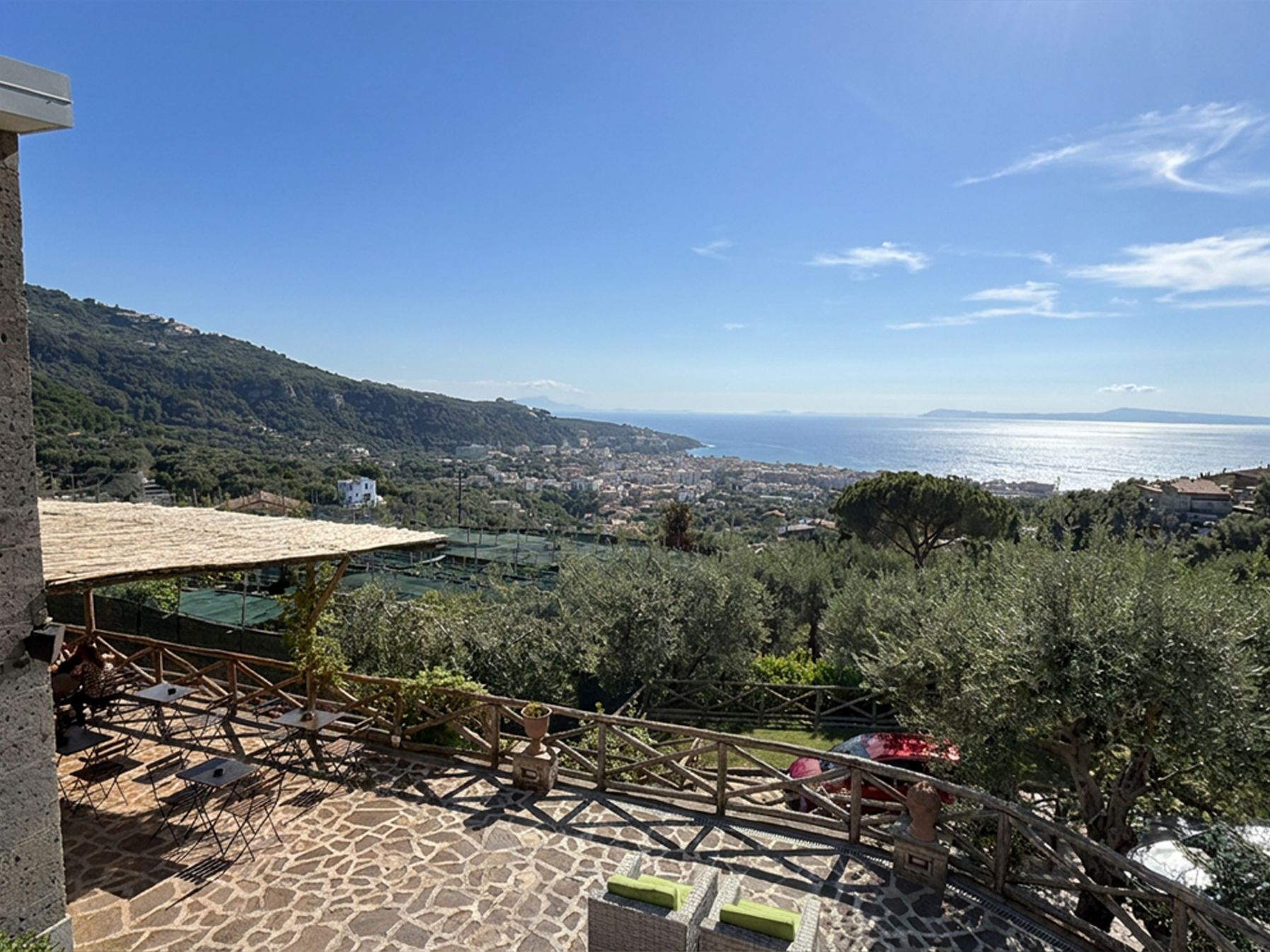
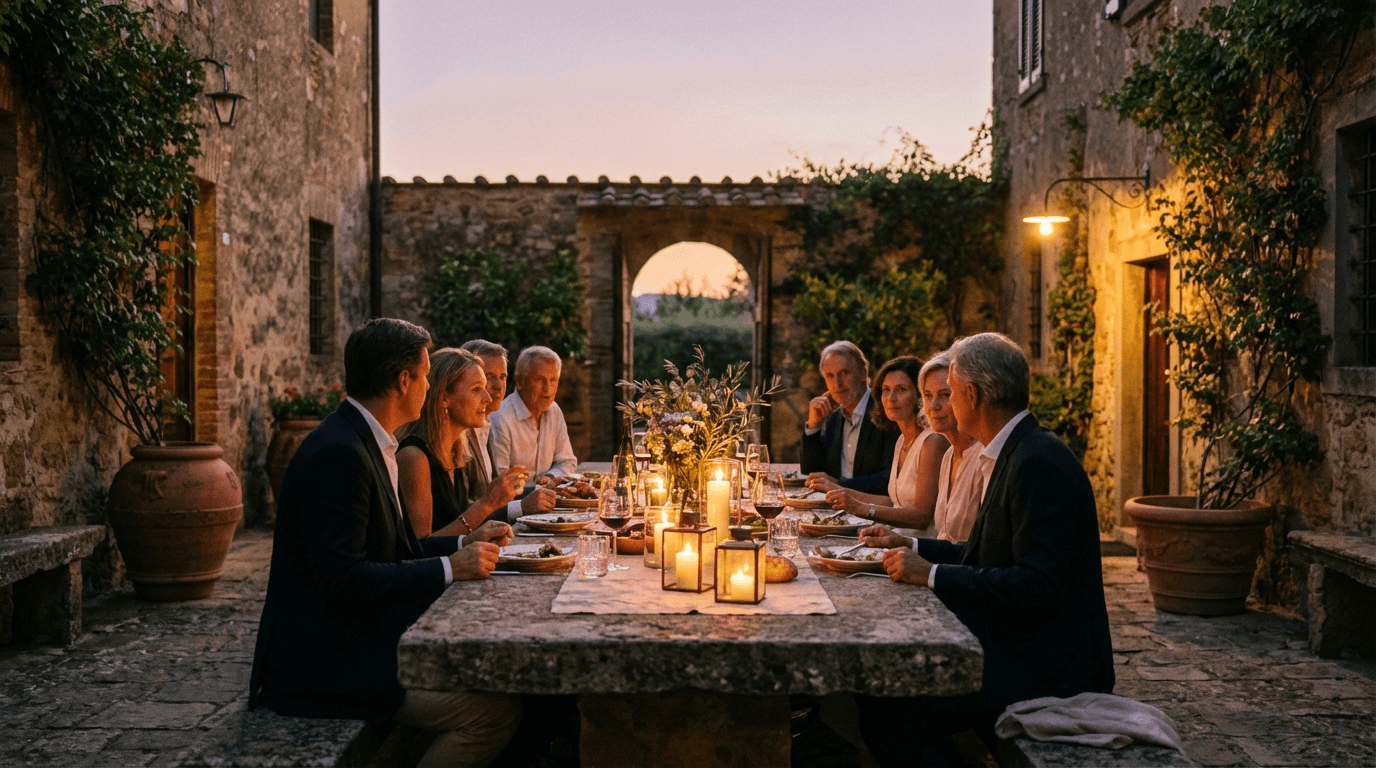
In Italy, this might mean morning strategy sessions overlooking the Val d’Orcia followed by a long, unhurried lunch where conversation continues informally. It could also mean evening discussions in a private Roman courtyard, where ideas settle differently than they would under fluorescent lights.
These are not aesthetic choices. They are cognitive ones.
The role of shared experience in executive coherence
Decision quality is not only individual. It is collective. Leadership teams make better decisions when trust is implicit and communication is efficient. This does not emerge from agendas alone.
Shared experiences outside the meeting room recalibrate relationships and reduce friction. They remind leaders of their common identity beyond functional roles.
Italy’s culinary culture, regional traditions, and emphasis on shared meals play a unique role here. A private dinner in Emilia-Romagna or a guided tasting in Piedmont is not entertainment. It is a social mechanism that humanizes leadership interactions and surfaces real concerns behind formal positions.
When teams return to the table, decisions are sharper because the relational foundation is stronger.
Why familiar luxury venues often underperform
Many executive offsites default to international luxury hotels. They feel safe, predictable, and efficient. They also encourage passivity. Such venues are designed to remove friction, not provoke thought. Everything runs smoothly, but nothing interrupts default behavior. Leaders stay in their roles, and conversations follow known patterns.
Italy’s most effective offsite environments are different. They are not standardized. They have character and require a small degree of adaptation. That slight friction is beneficial because it heightens attention and presence.
A historic masseria in Puglia or a private estate in Umbria does not function like a conference center. It invites leaders to slow down and engage differently. The shift is subtle, but its impact on decision quality is significant.
End-to-end design makes the difference
Environment alone is not enough. Executive offsites succeed when the environment, program, and logistics are designed as a single system. Fragmented planning leads to quiet failure. A strong venue paired with a generic agenda underperforms, while a thoughtful program undermined by logistical stress collapses under pressure.
End-to-end design ensures coherence. Transfers are seamless so attention remains focused. Venues are chosen for suitability rather than reputation. Culinary concepts support energy and conversation instead of indulgence. Activities are integrated with purpose rather than added as distractions.
In Italy, this level of orchestration is essential. The country offers extraordinary variety, but it requires local knowledge to use it strategically.
From temporary insight to lasting impact
The real test of an executive offsite is not how it feels in the moment, but how decisions hold up afterward. Well-designed executive offsites in Italy create decisions that travel back with the team. They influence behavior weeks and months later. Leaders remember not just what was decided, but how it was decided.
The environment becomes part of the decision’s memory architecture. This is why the value of an executive offsite does not lie in the destination itself, but in its impact on thinking, alignment, and judgment. Italy, when used intentionally, amplifies that impact.
Choosing the right partner matters
Designing executive offsites at this level requires experience. It demands an understanding of leadership dynamics, decision psychology, and the Italian context in equal measure. It also requires restraint rather than spectacle, and precision rather than excess.
The goal is not to impress executives. It is to support them in making better decisions. If decision quality is becoming a strategic concern for your leadership team, it may be worth reconsidering not only what you discuss offsite, but the environment in which those discussions take place. A thoughtful conversation can help clarify whether a deliberately designed setting could support the decisions your organization needs to make next.
Rethinking Where Leadership Decisions Happen
If decision quality is becoming a strategic concern for your leadership team, it may be worth reconsidering not just what you discuss offsite, but the environment in which those discussions take place.
A thoughtful conversation can help clarify whether a deliberately designed setting could support the kind of decisions your organization needs to make next.