Corporate retreats have become a familiar ritual. Teams are flown somewhere inspiring, agendas are lightened, dinners are long, and everyone returns home hoping something meaningful happened.
Often, it didn’t. For CEOs and founders, this creates a quiet frustration. The intention was serious. Alignment, focus, momentum and trust but the outcome feels vague. Pleasant, perhaps. Memorable in parts. Yet strategically thin.
The problem is rarely execution. It is design.
Why this question matters now
Leadership teams are operating under conditions that did not exist a decade ago. Remote and hybrid work have diluted shared context. Informal alignment has weakened. Decisions travel slower. Culture is harder to feel, let alone steer.
In this environment, bringing people together physically is no longer optional. It is one of the few remaining levers leaders have to reset direction, rebuild coherence, and make the implicit explicit.
That also raises the stakes. A poorly designed retreat no longer feels neutral, it feels wasteful. Worse, it signals that leadership is not clear about what the time together is for.
Italy enters the picture precisely here. Not as a reward, but as a setting where corporate retreats in Italy can amplify intention or expose its absence.
Why most corporate retreats fail
Most retreats are built around logistics, not outcomes. Dates are chosen first. Then flights and a hotel that looks good in photos. The agenda is assembled last, often as a compromise between work sessions and leisure activities.
What is missing is a governing question. Without clarity on what must shift for the business or leadership team, the retreat becomes a container without content. Conversations happen, but they drift. People connect, but nothing consolidates.
Executives sense this intuitively. It is why many CEOs feel uneasy approving retreat budgets, even when they believe in the idea.
The failure is not that retreats mix work and pleasure, it is that they lack strategic tension.
A necessary reframing for CEOs and founders
A corporate retreat is not an event. It is a temporary operating system.
For a few days, the usual rhythms of hierarchy, urgency, and fragmentation are suspended. What replaces them should not be accidental. Effective retreats are designed backward from impact. The question is not what the team will do in Italy, it is what the team must be able to do differently after returning.
- Clarity of direction
- Quality of decision-making
- Trust under pressure
- Ownership without supervision
When this is clear, design becomes intentional rather than decorative.
What Italy actually contributes when used correctly
Italy is often misunderstood in corporate contexts. It is treated as an indulgence, a backdrop for celebration, or a perk justified by morale.
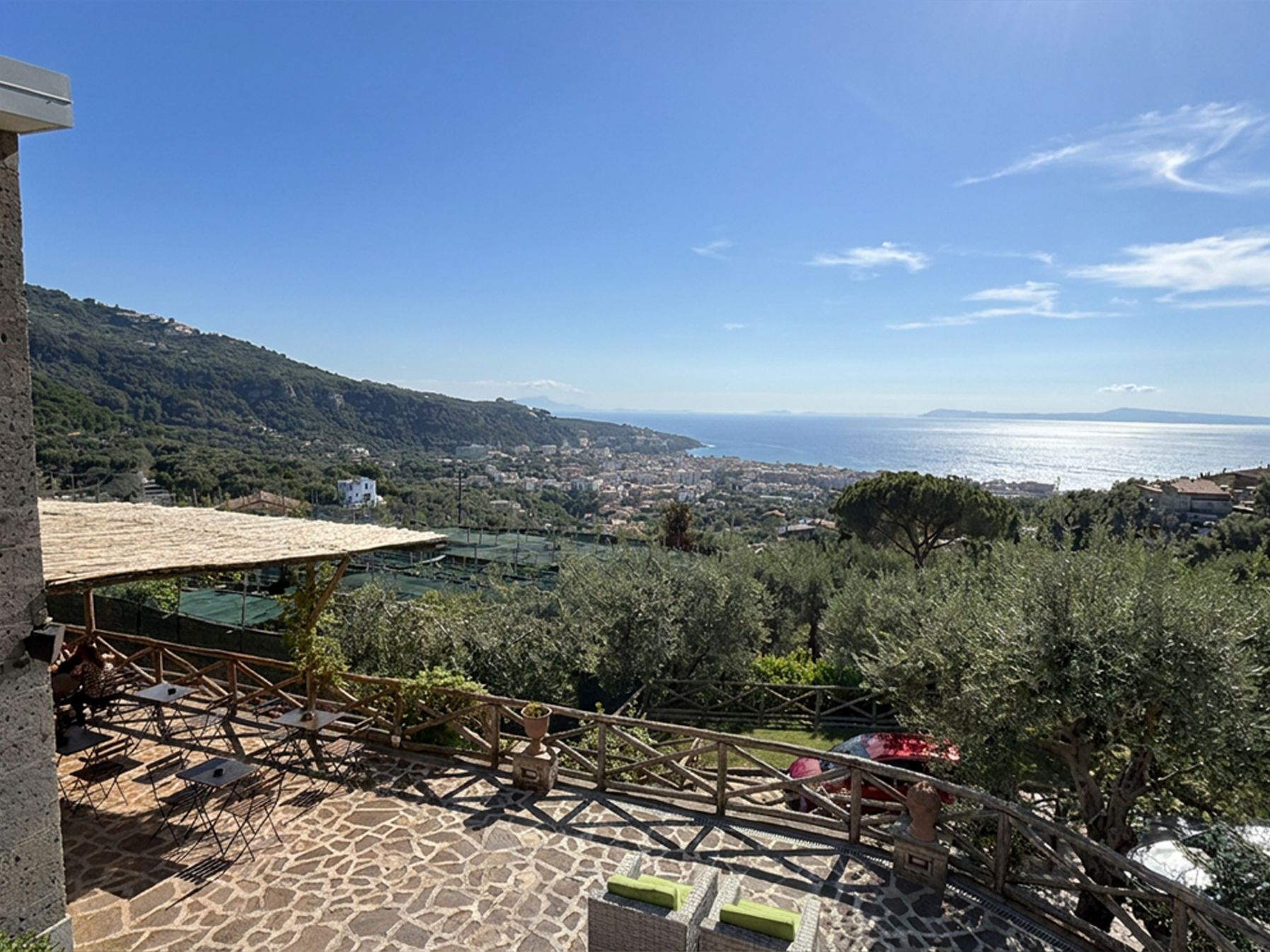
In reality, Italy offers something more structural. Italian settings naturally slow pace without killing momentum. A morning in the hills of Tuscany, a long lunch in Emilia-Romagna, or an evening walk through a quiet piazza in Umbria changes how people speak and listen.
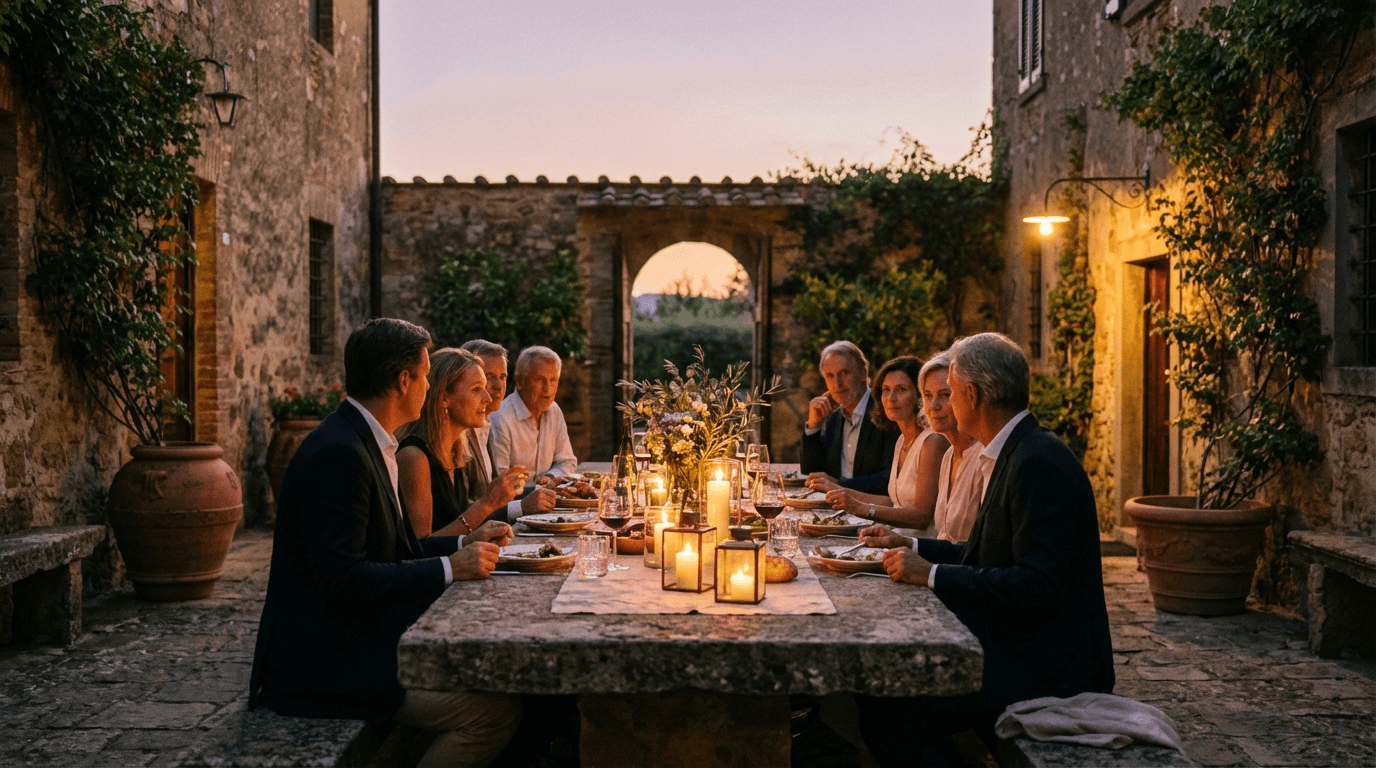
The culture values presence over performance. Meals are not interruptions, they are containers for dialogue. Time is not optimized, it is respected. This matters when the objective is alignment rather than productivity.
When used deliberately, Italy helps teams move from transactional interaction toward relational clarity. When used superficially, it becomes an expensive distraction.
Designing a retreat that actually works
Design begins with constraint. Before choosing a location or program element, leadership must articulate one primary objective. Not five. One.
For a CEO, this objective is rarely abstract. It often sounds like: a leadership team that debates openly without fracturing, a company that has grown faster than its internal trust, or a strategic shift that everyone has agreed to intellectually but not yet embodied.
Examples from practice are revealing.
In one case, a founder-led company arrived in Tuscany with a stated goal of “alignment.” What emerged quickly was not misalignment on strategy, but unresolved tension between long-serving leaders and recently hired executives. The retreat design shifted accordingly. Fewer plenary sessions. More structured small-group conversations. Long dinners became deliberate forums for surfacing assumptions that had never been spoken aloud. The outcome was not consensus. It was clarity.
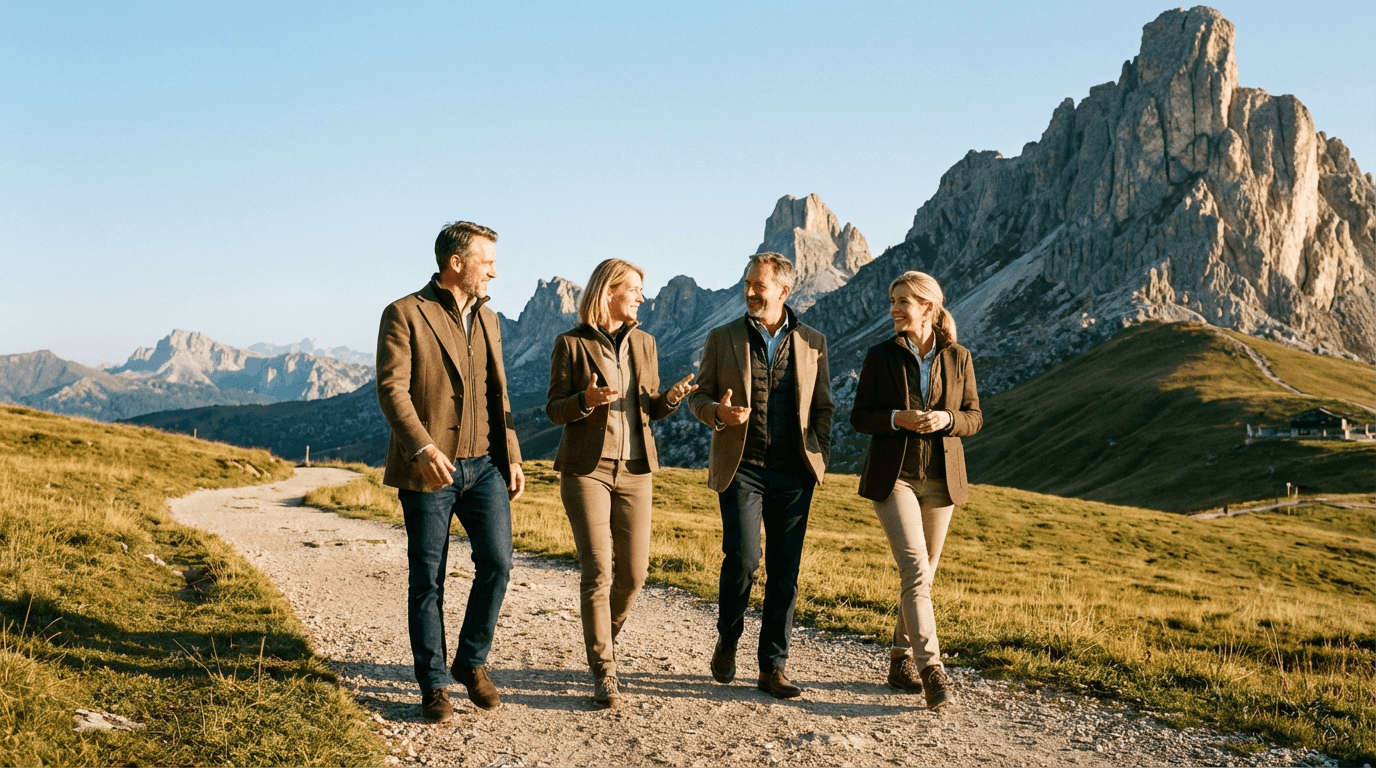
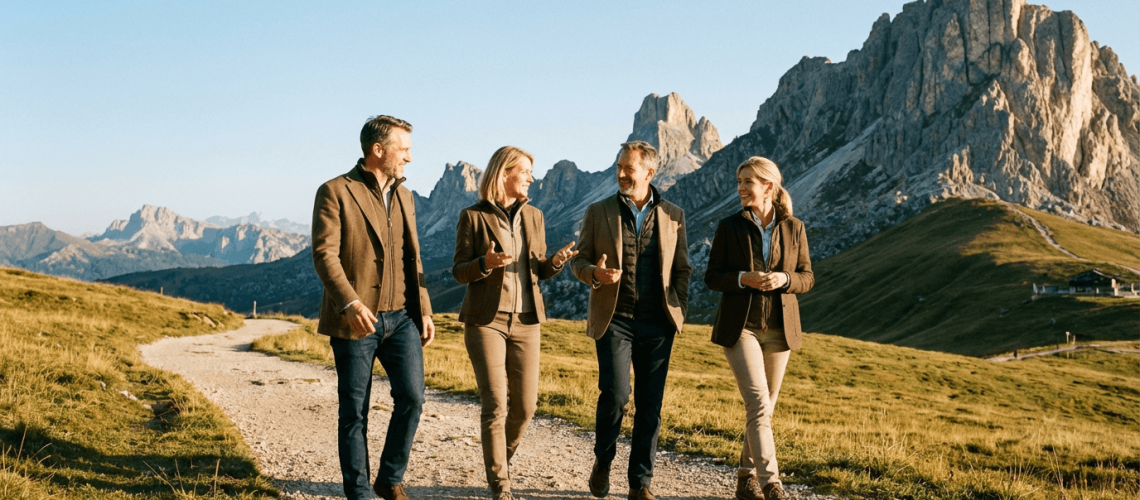
In another case, a scaling technology firm used a retreat in the Dolomites to prepare for a difficult organizational redesign. The work sessions were short and demanding. The afternoons were intentionally physical, long hikes, shared effort, quiet reflection. The landscape reinforced the message. Change requires stamina. Decisions have weight.
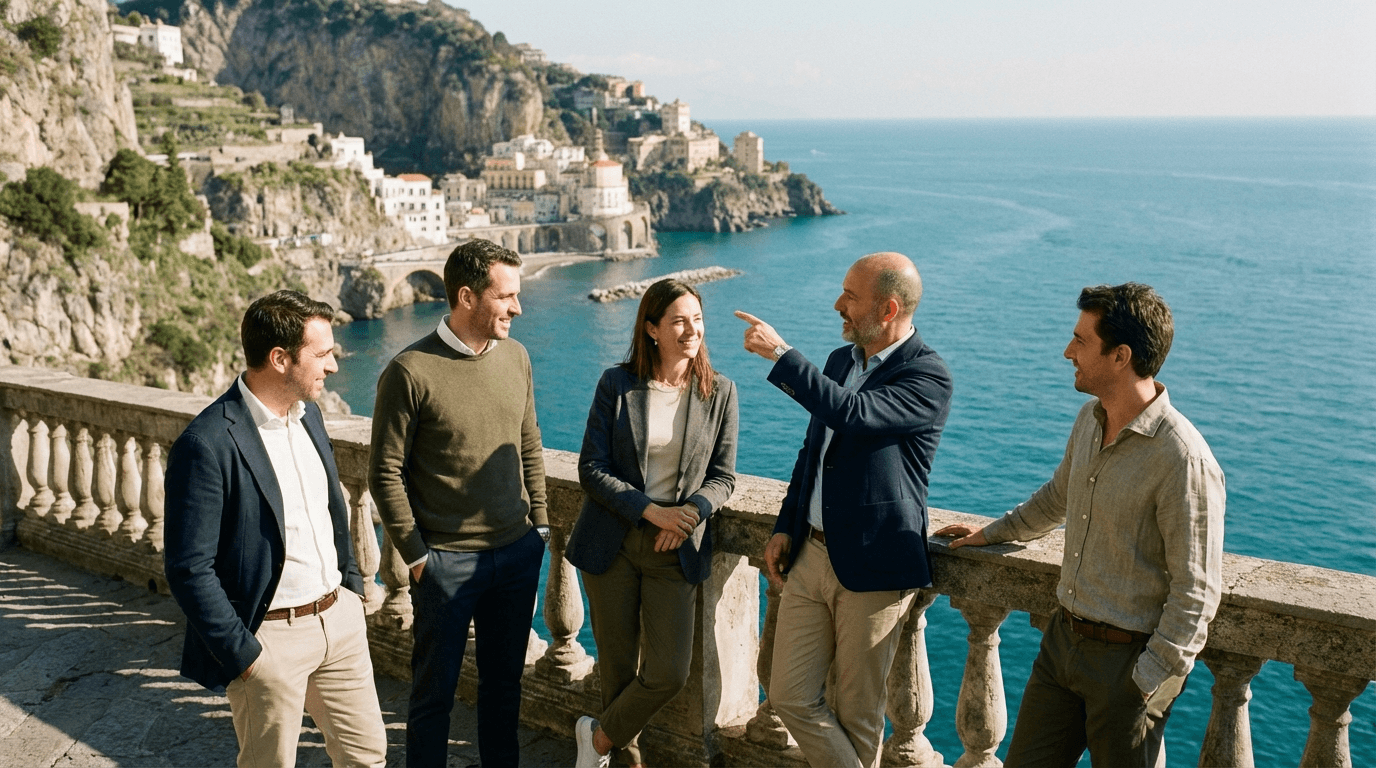
Once this objective is defined, Italy becomes a medium rather than a message. A secluded masseria in Puglia supports focus and privacy. A restored villa in Piedmont encourages long form conversation. A coastal setting in Liguria may suit reflection and reset rather than confrontation.
The setting should serve the work, not the other way around.
Structure without rigidity
The most effective retreats are structured but not packed. Formal sessions are intentional and limited. They are placed when energy and attention are highest, often in the morning. Afternoons allow for digestion, both literal and cognitive.
This rhythm mirrors Italian life itself. Work is done with seriousness, but never at the expense of humanity.
Importantly, the informal moments are not filler. Shared meals, walks, and unprogrammed time are where trust consolidates and insights surface.
But this only works if the strategic frame is clear. Without it, free time becomes avoidance rather than integration.
The role of facilitation and partnership
Many CEOs underestimate the value of an external design partner. This is not about outsourcing leadership. It is about protecting it.
When the CEO is also the host, the moderator, and the emotional anchor of the retreat, something gets lost. Either the conversation stays polite, or the leader carries the burden of steering while also participating.
An experienced partner holds the structure so leadership can stay inside the conversation. They design moments where friction is safe, where silence is allowed, and where conclusions are captured without being forced.
In Italy, this also means cultural fluency. Knowing which venues allow true privacy. Understanding regional rhythms. Designing experiences that feel native rather than staged. For example, a leadership dinner in Rome looks very different from one in a rural Umbrian borgo. In the city, energy is outward and expressive. In the countryside, it turns inward and reflective. These nuances matter when trust and candor are the goal.
This is where end-to-end responsibility matters. Fragmented planning leads to fragmented outcomes.
What changes when retreats are designed well
When a retreat is designed with intention, the shift is subtle but durable. Meetings shorten because assumptions were addressed and decisions speed up because trust was recalibrated. Leaders speak more directly because the relationship can carry it.
The retreat does not feel like a break from work. It feels like a reset of how work is done and then Italy becomes associated not with escape, but with clarity.
Decision confidence for CEOs
For CEOs and founders, the real question is not whether to hold a retreat in Italy. It is whether the retreat is being used as a leadership instrument or a cultural gesture.
Confidence comes from knowing what to ask. What must change. What the setting should enable. What success would look like six months later.
When those answers are clear, choosing the right partner becomes straightforward.
Considering a Corporate Retreat in Italy?
If you are considering a corporate retreat in Italy and are reflecting on what it should truly accomplish, a thoughtful conversation can help clarify whether the format, timing, and intent are aligned.